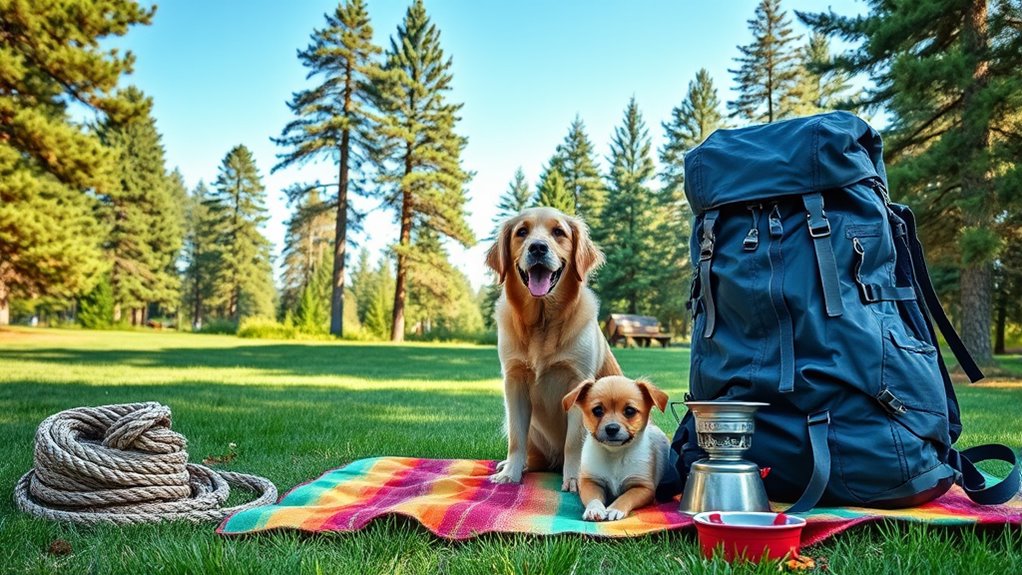

When camping with your dog, prepare by selecting dog-friendly trails with shaded areas and water crossings, ensuring you adhere to leash rules to keep your pet safe. Set up a secure campsite area using crates or natural barriers, and always have fresh water, shade, and a basic first aid kit on hand. Stay vigilant about wildlife and plant hazards. With proper gear, food, and activity planning, you’ll create a safe, enjoyable experience—discover more tips to optimize your adventure.
Key Takeaways
- Pack essential gear like a sturdy leash, harness, crate, and first aid kit tailored for dogs.
- Bring sufficient dog food, treats, and portable water bowls to ensure proper nutrition and hydration.
- Choose dog-friendly activities such as short hikes, fetch, and swimming to keep your pet engaged safely.
- Prepare a designated, secure campsite area using natural barriers or portable enclosures.
- Research local wildlife and plant dangers to keep your dog safe during outdoor exploration.
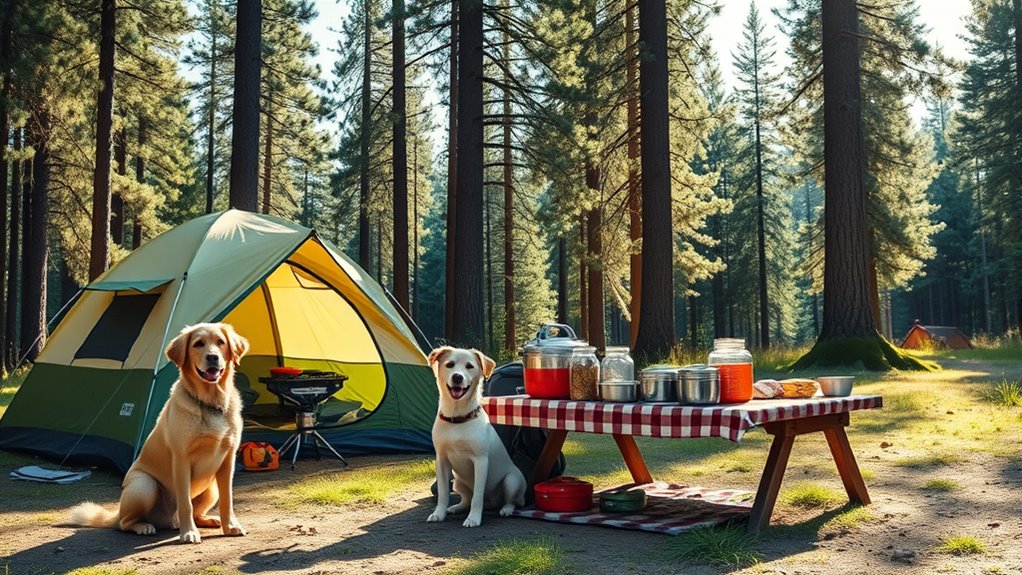
Camping with dogs can be a rewarding experience, but it requires careful planning and preparation to guarantee safety and enjoyment for both you and your pet. One of the most significant aspects is selecting dog-friendly trails. When researching your destination, prioritize trails that explicitly welcome dogs and provide clear guidelines on leash requirements and trail regulations. Dog-friendly trails often feature shaded areas, water crossings, and varied terrain that keeps your pet engaged and safe. Always check trail conditions beforehand—wet, muddy, or steep paths can pose risks for both you and your dog. Keeping your dog on a leash not only minimizes the chance of wildlife encounters or losing track of your pet but also ensures adherence to trail rules, contributing to overall campsite safety.
Once you’ve chosen suitable trails, focus on campsite safety by setting up a secure, designated area for your dog. Use a sturdy, well-ventilated crate or a tether line attached to a solid anchor to prevent your pet from wandering into unsafe zones or disturbing wildlife. Always keep your dog within sight, especially during setup or when exploring nearby. It’s essential to assess the campsite for potential hazards—sharp objects, toxic plants, or open flames—and eliminate these risks or keep your dog away. If your campsite lacks fencing, consider bringing portable barriers or using natural features like trees and bushes to create a safe boundary. Remember, an uncontained dog can easily get lost or injured, especially in unfamiliar surroundings.
Set up a secure, designated dog area with crates or natural barriers to ensure safety and prevent wildlife disturbances.
Another key safety consideration involves hydration and shade. Make sure your dog has constant access to fresh water, especially during warm weather or active days. A collapsible bowl is convenient for travel and can be easily packed. Providing shaded resting spots, whether with a canopy or natural shade, helps prevent overheating and keeps your dog comfortable. Pay attention to signs of heat exhaustion, such as excessive panting or drooling, and plan your activities accordingly to avoid the hottest parts of the day. Always carry a basic first aid kit tailored for dogs, including antiseptic wipes, bandages, and any necessary medications.
In addition, familiarize yourself with local wildlife and plant life. Keep your dog close to avoid encounters with potentially dangerous animals or ingestion of toxic flora. Practice leash discipline and recall commands regularly to maintain control. These precautions, combined with selecting suitable trails and establishing campsite safety measures, set the foundation for a successful, safe outdoor adventure with your dog. Proper preparation guarantees everyone can enjoy the natural beauty while minimizing risks, making your camping trip a memorable and safe experience.
Frequently Asked Questions
How Do I Keep My Dog Cool During Hot Weather Camping?
To keep your dog cool during hot weather camping, make certain you provide ample hydration tips like fresh water frequently and shade. Use cooling accessories such as cooling mats or bandanas soaked in water to help regulate their temperature. Avoid strenuous activities during peak heat, and always monitor for signs of overheating. Your attentive approach keeps your dog comfortable and safe, making the camping experience enjoyable for both of you.
What Are the Best Dog-Friendly Campsites?
Imagine finding a hidden gem where nature’s whispers greet you—these are the best dog-friendly campsites. Look for spots with lush dog-friendly trails that wind through scenic landscapes, ensuring your pup’s adventure. Prioritize campsites with amenities like shaded areas, water access, and secure fencing, giving both of you peace of mind. An experienced eye spots well-maintained sites that blend comfort with the wild, creating a perfect retreat for you and your furry companion.
How Can I Prevent My Dog From Getting Lost?
To prevent your dog from getting lost, start with leash training so your pup stays close during hikes. Always keep a sturdy leash and harness on, and make certain your dog wears up-to-date identification tags with your contact info. Consider microchipping as an extra safety measure. Keep a close eye, especially near unfamiliar trails or wildlife, and establish a habit of checking your dog’s collar regularly throughout your camping trip.
What Are Safe Plants and Hazards to Avoid?
You should avoid poisonous flora like foxglove, lily of the valley, and certain mushrooms, which can cause serious health issues if ingested. Keep your dog on a leash and supervise their foraging to prevent hazards from plants like wild berries or toxic weeds. Educate yourself on local flora, and carry a pet first aid kit. Regularly inspect your campsite for potential foraging hazards, ensuring your dog stays safe.
How Do I Manage My Dog’s Anxiety in New Environments?
If you notice your dog’s anxiety spiking in new environments, act quickly. Use dog calming techniques like gentle praise, soothing voice, and a familiar item to create comfort. Implement anxiety relief methods such as calming collars or pheromone diffusers, and give your pup plenty of space and reassurance. Stay calm yourself—your confidence helps ease their nerves. With patience and consistent routines, you can help your dog feel secure amid new adventures.
Conclusion
By packing the right gear, choosing suitable food, and planning engaging activities, you set the stage for a memorable camping trip with your dog. Prepare for the unexpected, respect nature’s challenges, and prioritize your pet’s safety and comfort. With careful planning and thoughtful execution, you’ll create adventures filled with exploration, bonding, and joy. Embrace the outdoors together, cherish every moment, and turn your camping experience into a treasured memory for both of you.