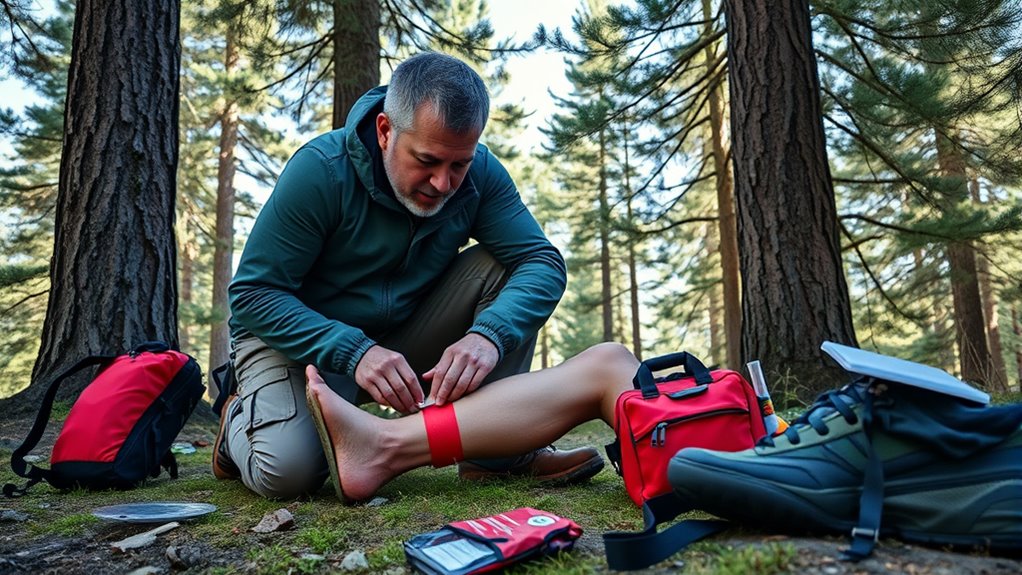

When you’re in the wild, stay calm and act quickly. First, guarantee safety for everyone, then provide basic first aid like cooling burns with water, stopping bleeding, or immobilizing fractures. Keep an eye on environmental hazards and wildlife. Use your kit wisely, call for help when needed, and monitor the injured until help arrives. Staying prepared and knowing these steps helps you handle emergencies confidently; more tips can empower you further.
Key Takeaways
- Keep calm, assess the situation quickly, and prioritize urgent injuries like bleeding, burns, or fractures.
- Use a well-stocked first aid kit to treat wounds, burns, and insect bites immediately.
- For fire-related injuries, cool burns with running water for at least 10 minutes and cover with sterile dressings.
- Handle wildlife encounters by maintaining distance, avoiding feeding, and responding calmly to threats.
- Call emergency services with precise location details for serious injuries or if evacuation is necessary.
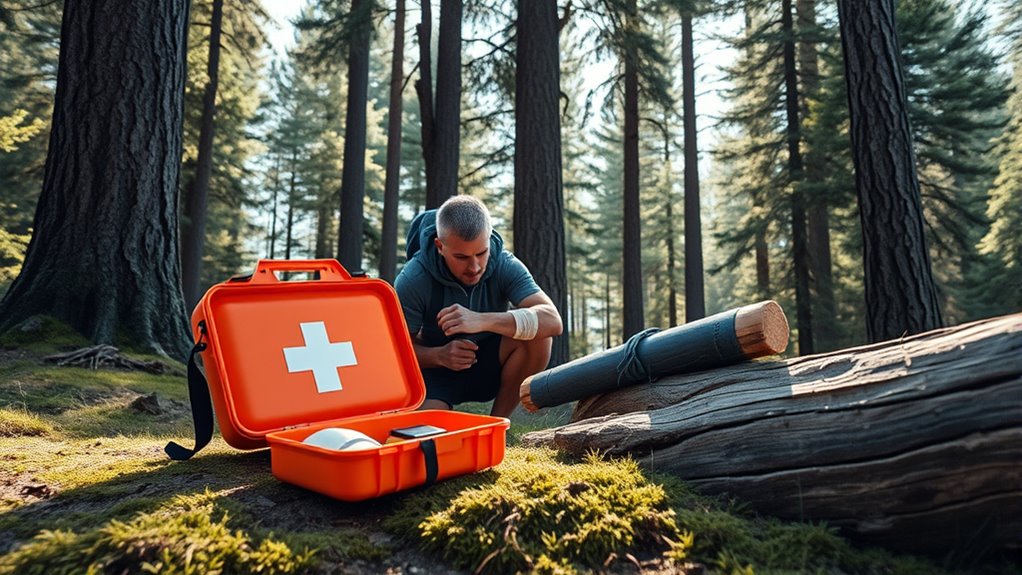
Ever wondered what to do if someone gets injured while camping? Knowing basic first aid skills can make all the difference in these situations. Whether it’s a minor scrape or a more serious injury, staying calm and acting quickly is essential. Before heading out, familiarize yourself with essential first aid procedures and pack a well-stocked kit. This way, you’ll be prepared to handle emergencies efficiently and keep everyone safe.
Knowing basic first aid skills ensures safety and confidence during camping adventures.
One of the most common camping incidents involves cuts or burns from campfire mishaps. To prevent accidents, practice campfire safety by keeping fires small, never leaving them unattended, and ensuring they are fully extinguished before sleeping or leaving the site. Always keep a bucket of water or a fire extinguisher nearby to quickly put out any flare-ups. If someone gets burned, cool the burn immediately with clean, running water for at least 10 minutes and cover it with a sterile dressing. Avoid applying ointments or popping blisters, as these can cause infection. Being proactive about campfire safety reduces the risk of injuries and helps maintain a safe environment for everyone.
Wildlife encounters are another factor to contemplate. While most animals avoid humans, some situations may require quick action. If you encounter wildlife, stay calm, keep your distance, and do not attempt to feed or touch the animals. If an animal becomes aggressive or attacks, defend yourself by standing your ground, making loud noises, or using any available object as a barrier. If bitten or scratched, clean the wound with soap and water immediately, apply pressure to stop bleeding, and seek medical help as soon as possible. Knowing how to respond to wildlife encounters can prevent escalation and reduce the risk of infection or injury.
In case of more serious injuries, such as fractures or head trauma, prioritize keeping the injured person still and comfortable. Immobilize broken limbs with splints or improvised supports, and avoid moving someone with a suspected head or neck injury unless there’s an immediate danger. If someone collapses or shows signs of shock, keep them warm and elevate their legs if possible while monitoring their breathing. Regularly checking air quality can also help you decide if additional precautions are needed, especially in areas with poor ventilation or pollution. Always call for emergency assistance if you’re in doubt about the severity of an injury, and provide clear information about your location.
Frequently Asked Questions
What Should I Do if I Encounter a Wild Animal Attack?
If you encounter a wild animal attack, stay calm and avoid confrontation to guarantee your safety. Back away slowly, making yourself look larger and maintaining eye contact. Use bear spray if available, and try to appear non-threatening. Remember, wild animal safety relies on confrontation avoidance. Do not run or turn your back, as this can provoke an attack. Your goal is to de-escalate the situation and give the animal space.
How Can I Treat Hypothermia in Outdoor Conditions?
You should act quickly to treat hypothermia by removing wet clothing and insulating the person with dry materials, such as blankets or clothing. Offer warm fluids if they are conscious and able to swallow, as this helps raise body temperature. Focus on increasing clothing insulation and keeping the person as warm as possible while waiting for professional help. Avoid sudden movements or heating methods that could cause shock.
What Are the Signs of Dehydration and How to Prevent It?
Think of dehydration symptoms as your body’s whispered warnings—dry mouth, dark urine, and fatigue. To stay ahead, follow hydration tips like drinking regularly, even if you aren’t thirsty, and avoid excessive alcohol or caffeine. You can prevent dehydration by sipping water frequently, eating hydrating foods, and watchfulness over your urine color. Staying proactive ensures you maintain energy and focus during outdoor adventures.
How Do I Handle a Broken Bone in the Wilderness?
If you suspect a broken bone, stop movement immediately to prevent further injury. Use splinting techniques, like padding the limb and securing it with sticks or rolled-up clothing, to immobilize the area. Keep the person still, elevate if possible, and avoid realigning the bone. Apply a splint along the limb’s natural position, securing it firmly but comfortably. Seek professional medical help as soon as possible.
What Are the Best Ways to Prevent Insect-Borne Illnesses?
Think of insect-borne illnesses as tiny invaders; you wouldn’t leave your door open. To prevent them, always use insect repellent and wear protective clothing, especially during dawn and dusk. Check your gear for ticks and avoid standing water. I once forgot repellent near a swamp, and a mosquito bite led to illness. Staying vigilant with these steps keeps you safe and healthy during your adventure.
Conclusion
Being prepared with basic first aid knowledge can make all the difference during a wilderness emergency. Remember, nearly 60% of outdoor injuries happen within a mile of your campsite, so stay alert and ready to act. Keep a well-stocked kit, stay calm, and use your skills wisely. With quick thinking and proper care, you can turn a potentially serious situation into a manageable one. Stay safe out there and enjoy your adventures responsibly.