

To choose the right camping water heater, consider your power sources, travel style, and water needs. Propane heaters are portable and great for off-grid trips, while electric models work well if you have reliable hookups. Heat-exchange systems are efficient but may be slower. Think about your budget, safety, and how easy it is to set up your heater. If you want detailed tips, keep exploring to find the best option for your adventure.
Key Takeaways
- Assess your power source availability: electric for reliable hookups, propane for portability, heat-exchange for efficiency off-grid.
- Consider water usage patterns, trip duration, and capacity needs to select an appropriately sized heater.
- Evaluate portability and setup ease: propane units are lightweight and simple, electric models require electrical access.
- Prioritize safety features and maintenance requirements to ensure reliable operation and longevity.
- Balance energy efficiency, environmental impact, and budget to choose the most suitable heater type for your camping style.
How to Assess Your Camping Water Needs

Before choosing a water heater for camping, you need to determine how much hot water you’ll actually use. Start by evaluating your typical activities, like washing dishes, showering, or cleaning gear. This helps you estimate the daily hot water demand. Consider your plumbing setup—if your camper has a compact or complex system, it might influence your heater choice and capacity. Additionally, water quality matters; if you camp in areas with hard or mineral-rich water, you’ll want a unit that handles mineral buildup and maintains performance. Knowing your water needs ensures you select a heater that’s efficient and sufficient without wasting energy or resources. Carefully examining these factors helps you avoid over- or under-sizing your heater, making your camping experience more comfortable. Integrating natural filtration systems can also help reduce chemical usage and support sustainable practices in your setup.
What Are Your Power and Fuel Options When Camping?

Understanding your available power and fuel sources is essential when selecting a camping water heater, as these options directly impact which units are practical for your setup. If you have reliable access to electricity, an electric water heater might be convenient, but consider your battery capacity—larger batteries can support longer use. Solar power offers an eco-friendly option if you’re parked in sunny locations; it reduces reliance on fuel or grid electricity but may depend on weather conditions. Propane heaters are portable and don’t require electrical power, making them suitable for remote camping. Your choice hinges on your energy availability: if you have ample solar capacity, go solar; if you rely on batteries, ensure they can handle your hot water needs; and if power is scarce, propane might be the best fit. Additionally, understanding your power and fuel options can help you optimize energy efficiency and ensure reliable hot water during your trips.
Which Water Heater Type Is Best for Your Camping Style?

Choosing the right water heater depends on your camping style and what matters most to you. Consider how portable you need it, whether you have reliable power or fuel access, and how quickly you want hot water. These factors help determine which type fits best with your outdoor adventures. Additionally, understanding energy efficiency can help you make a more sustainable choice for your camping needs.
Mobility and Portability Needs
When packing for a camping trip, your water heater needs to fit seamlessly into your gear without adding unnecessary weight or bulk. If you prioritize mobility, look for a model with a portable design that’s lightweight and compact. Propane heaters often excel here because they’re generally smaller and easier to carry, making them ideal for backpacking or quick getaways. Electric units tend to be bulkier and heavier, better suited for vehicle-based setups. Heat-exchange systems, while efficient, can be heavier due to their construction. Consider your weight considerations carefully—lighter options will make setting up and packing down less stressful, especially if you’re moving frequently. Additionally, understanding the contrast ratio of your water heater can help you evaluate its performance in different conditions, ensuring reliable hot water when needed. Choosing a water heater with good portability ensures you stay flexible and comfortable no matter how rugged your camping adventure becomes.
Energy Availability and Access
Ever wondered which water heater works best given your access to power sources? Your camping style greatly influences your choice. If you’re off-grid or rely on renewable energy, propane or heat-exchange systems are ideal because they don’t need electricity. Electric water heaters require consistent power access, making them better for campgrounds with reliable hookups. Consider this table:
| Power Source | Best Water Heater Type |
|---|---|
| Off-grid power | Propane, Heat-exchange |
| Reliable electrical | Electric |
| Renewable energy | Heat-exchange, Propane |
| No power access | Propane |
| Solar or wind | Heat-exchange (if compatible) |
Matching your energy access guarantees you pick a water heater that keeps your camping comfortable without hassle.
Heating Efficiency and Speed
The speed and efficiency with which a water heater heats water can substantially impact your camping experience. A higher heating rate means you’ll get hot water faster, saving time and energy. Different heater types vary in thermal transfer efficiency; electric models often heat quickly due to direct electrical conversion, while propane heaters rely on combustion, which can be slower but more powerful. Heat-exchange systems transfer heat more efficiently by utilizing existing heat sources, providing a good balance of speed and energy use. If you need rapid hot water for activities like washing or cooking, prioritize heaters with a higher heating rate. Conversely, if efficiency is your main concern, choose models with optimized thermal transfer capabilities. Your camping style should guide your choice based on how quickly and efficiently you need hot water. Understanding thermal transfer can help you make an informed decision about which water heater type best suits your needs.
Key Factors for Choosing a Portable and Easy-to-Set-Up Water Heater

Choosing a portable and easy-to-set-up water heater depends on several key factors that guarantee convenience and reliable performance. First, consider the durability considerations, ensuring it withstands outdoor conditions without frequent repairs. A lightweight design makes setup quick and hassle-free, saving you time at your campsite. Also, think about the environmental impact—opting for models with energy-efficient features reduces your carbon footprint. To simplify your decision, focus on:
- Compact size and lightweight construction for portability
- Simple installation with minimal tools or expertise
- Long-lasting build materials that resist corrosion and wear, especially when exposed to outdoor elements ergonomics and design
Cost, Safety, and Maintenance Tips for Camping Water Heaters

When selecting a camping water heater, balancing cost, safety, and maintenance is key to ensuring a smooth outdoor experience. Start by doing a cost comparison to find an option that fits your budget without sacrificing quality. Always follow safety precautions, such as keeping propane units in well-ventilated areas and checking for leaks before use. Regular maintenance, like flushing out mineral build-up or inspecting connections, keeps your heater running efficiently and prolongs its lifespan. Keep safety gear nearby, and never leave the heater unattended while in operation. Proper upkeep and awareness of safety measures help prevent accidents, ensuring your camping trip remains enjoyable. Additionally, understanding Italian gelato culture and pricing can inspire creative ways to fund your outdoor adventures and enjoy them even more. By focusing on these tips, you’ll enjoy reliable hot water without unnecessary risks or expenses.
How to Pick the Right Water Heater for Your Camping Trip
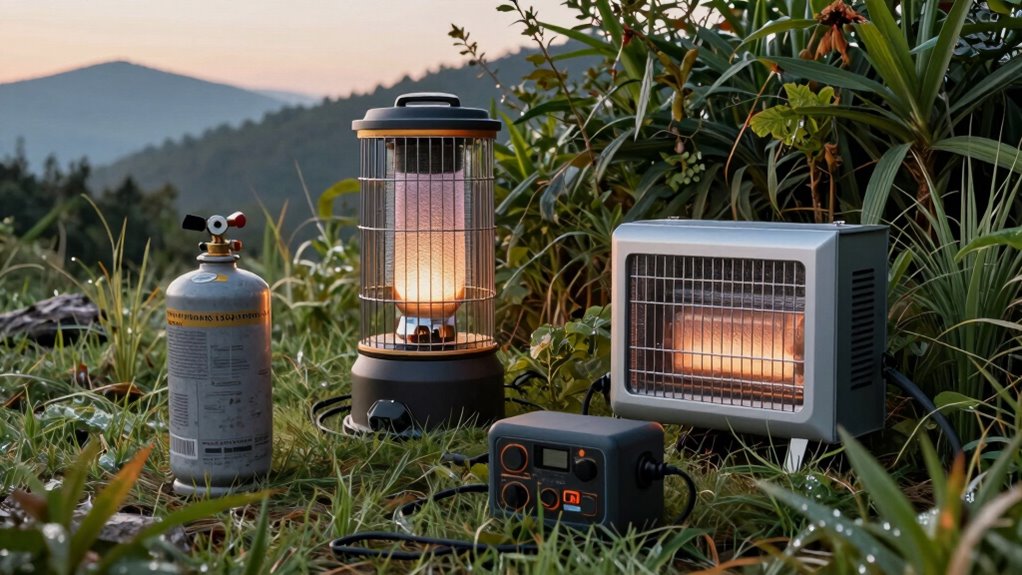
Selecting the right water heater for your camping trip depends on understanding your specific needs and how you’ll use it. Consider the water heater capacity to guarantee it supplies enough hot water for your group without wasting energy. Accurate temperature control is also essential for safety and comfort, allowing you to set the right water temperature. To make the best choice, think about these factors:
- How many people will use the heater simultaneously
- The typical duration of your trips
- The ease of adjusting temperature settings
- Energy efficiency can significantly impact the overall cost and environmental footprint of your camping setup.
Frequently Asked Questions
How Long Can a Camping Water Heater Operate on a Single Fuel or Power Source?
You can expect a camping water heater to operate for several hours on a single fuel or power source, depending on its fuel efficiency and capacity. Propane models typically run for 1-2 hours per tank, while electric units may operate continuously if plugged in, but their duration depends on power availability. Heat-exchange systems often offer longer operating durations with better fuel efficiency, making them suitable for extended use during camping trips.
What Are the Environmental Impacts of Different Camping Water Heater Types?
You’ll find that propane water heaters emit more greenhouse gases compared to electric or heat-exchange models. Opting for sustainable options, like electric heaters powered by renewable energy, reduces your environmental impact. Heat-exchange systems often use less energy and produce fewer emissions. By choosing eco-friendly options, you help minimize your carbon footprint while enjoying clean water during your camping trip. Prioritizing renewable energy sources makes your outdoor adventures more environmentally responsible.
Can I Use a Home Water Heater for Camping Purposes?
Using a home water heater for camping is like trying to fit a whale into a teacup — it’s not practical or safe. Home water heaters aren’t designed for the rugged, mobile environment of camping, and using one can pose serious safety risks. Stick to portable camping water heaters to guarantee your safety and comfort. They’re built for the outdoors, making your adventure safer and more enjoyable.
How Do Weather Conditions Affect the Performance of Camping Water Heaters?
Weather conditions substantially impact your camping water heater’s performance. Extreme cold can reduce efficiency, especially for propane and electric models, making it harder to heat water. Temperature fluctuations may cause inconsistent output or longer heating times. To guarantee weather resilience, insulate your heater, use weatherproof covers, or choose models designed for outdoor use. Staying prepared helps maintain reliable hot water, regardless of weather changes.
Are There Specific Regulations or Permits Required for Camping Water Heaters?
You might be surprised to learn that camping water heaters often require specific regulations or permits, especially if you’re using propane or installing them in certain areas. For camping safety, check local laws before setup and always follow manufacturer’s water heater maintenance instructions. Some parks or private campsites might need permits to operate propane units or electrical hookups, so verify requirements beforehand to avoid fines or safety hazards during your adventure.
Conclusion
Choosing the right camping water heater is like picking the perfect vessel for a voyage—your needs guide the course. Whether propane, electric, or heat-exchange, each option is a different sail, wind, or rudder. Trust your adventure’s destination: safety, convenience, and cost lead the way. With the right choice, you’ll navigate your camping trip smoothly, arriving at your destination refreshed and prepared—ready to embrace every moment with warm water and peace of mind.