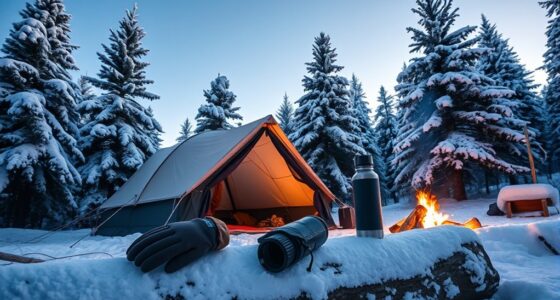
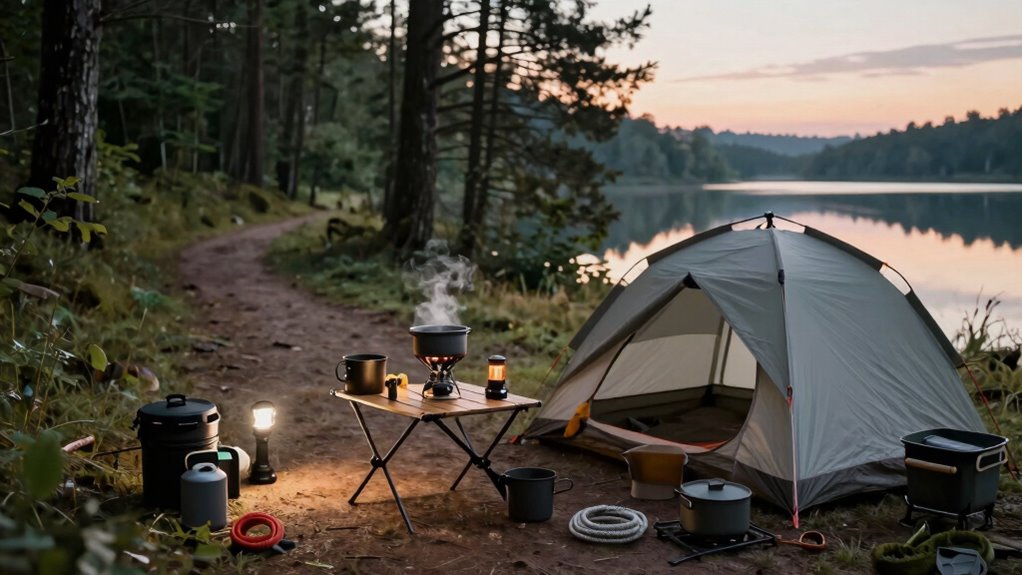

Good camping hinges on well-designed systems that manage gear, safety, and routines, rather than just having the right equipment. When your gear is organized into dedicated kits and your strategies adapt to changing conditions, you’ll enjoy safer and more enjoyable trips. Systems help you respond quickly to weather shifts or emergencies and reduce stress during setup and breakdown. Keep exploring, and you’ll discover how building effective camping systems makes every adventure smoother and more rewarding.
Key Takeaways
- Systems integrate gear management with overall camping strategy, ensuring safety, efficiency, and adaptability during trips.
- Organized routines reduce time spent searching, allowing for quick responses to changing conditions and emergencies.
- Proper systems promote responsible fire use and environmental stewardship, minimizing impact and enhancing safety.
- Cohesive gear systems improve reliability, helping campers handle unforeseen challenges confidently.
- Focusing on systems simplifies decision-making, reduces stress, and enhances enjoyment of the outdoor experience.
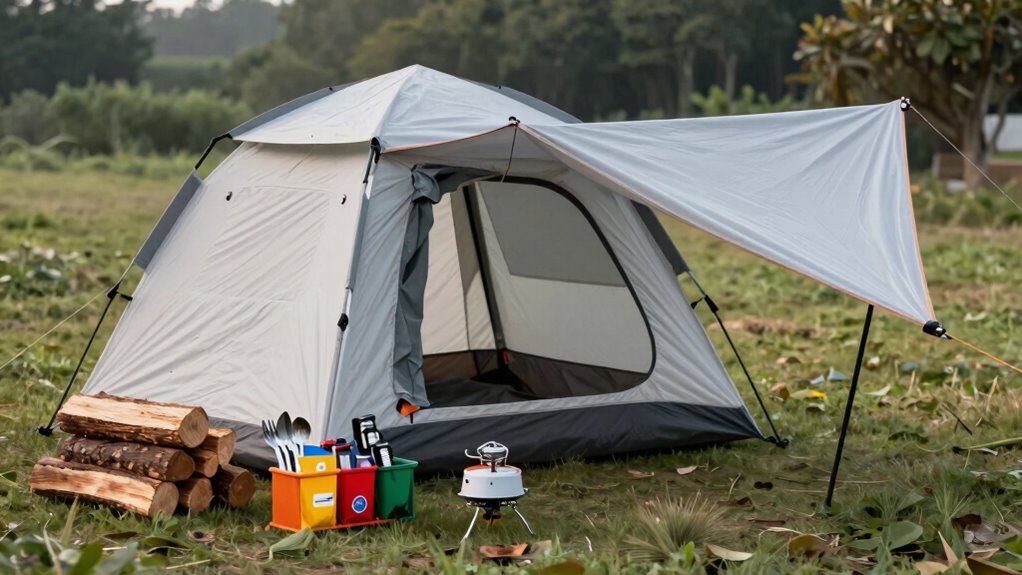
When it comes to camping, focusing solely on gear can lead to overlooked advantages of a well-designed camping system. While high-quality equipment is important, it’s the way you integrate and manage that gear that truly makes your experience safe, efficient, and enjoyable. A good camping system considers not just what you carry, but how you use it, ensuring everything works together seamlessly. This approach simplifies decision-making, reduces stress, and helps you adapt quickly to changing conditions.
One crucial aspect of a solid camping system is understanding campfire safety. It’s not enough to just carry matches or a lighter; you need a plan for building and extinguishing fires responsibly. A well-designed system includes knowledge of local regulations, selecting the right fire site, and bringing appropriate tools like a fire ring or a shovel. These elements minimize the risk of wildfires and protect the environment. Following Leave no trace principles is also vital. Your system should emphasize packing out all trash, minimizing impact on the land, and leaving the site better than you found it. When you view your gear as part of a holistic plan, you’re more likely to practice responsible camping, ensuring that future generations can enjoy the same natural beauty.
Effective campfire safety relies on responsible planning, proper tools, and respecting Leave No Trace principles to protect nature and future campers.
Beyond safety and environmental concerns, a good camping system streamlines your setup and breakdown routines. Instead of scrambling for individual items, you organize your gear into dedicated kits—sleeping, cooking, first aid, and so on. This organization means you can quickly find what you need without wasting time or risking damage. It also reduces the likelihood of forgetting essential items, which often happens when gear is scattered or unorganized. This efficiency enhances your experience, allowing you to focus on connecting with nature rather than managing chaos. Incorporating systematic organization into your camping approach can greatly improve your overall experience. Additionally, understanding the importance of environmental impact in your system encourages more sustainable practices during your trip.
A well-thought-out camping system also promotes adaptability. Weather changes, trail conditions, or unforeseen issues require quick thinking. When your gear is part of a cohesive system, you can adjust your plans with confidence. For example, if a storm blows in, you know exactly which tarp or shelter to deploy, and you’re prepared to handle it safely. This proactive approach is far more effective than improvising with disorganized gear, which can compromise safety and comfort. Recognizing campfire safety as a part of your system ensures you’re prepared to prevent wildfires and protect the environment. Recognizing potential risks and planning accordingly helps you enjoy the outdoors responsibly.
As an affiliate, we earn on qualifying purchases.
Frequently Asked Questions
How Do I Develop a Personalized Camping System?
To develop a personalized camping system, start by establishing effective camping routines that suit your style and needs. Focus on gear selection that complements these routines, choosing versatile, lightweight, and reliable items. Test your system on shorter trips to identify what works best, then refine it based on your experiences. This way, your camping setup becomes seamless, efficient, and tailored specifically to your preferences and the environments you explore.
What Are Common Mistakes in Camping System Planning?
A common mistake in camping system planning is neglecting to customize your packing checklist for your specific trip, leading to forgotten essential camping gear or unnecessary items. You might also overpack or underprepare, which hampers your experience. Make certain you evaluate your needs carefully, balance gear with practicality, and regularly update your packing checklist to avoid these pitfalls. Proper planning ensures your system works seamlessly when you’re out in nature.
How Can I Adapt My System for Different Environments?
To adapt your system for different environments, focus on environmental adaptability and gear versatility. You can do this by choosing multi-purpose gear that works in various conditions and packing modular items that you can easily swap out or layer. Research your destination’s climate and terrain beforehand, then tweak your system accordingly. This way, you stay prepared, minimize excess gear, and guarantee your setup remains efficient, no matter where you camp.
What Role Does Experience Play in Creating Effective Systems?
Experience acts as your compass in crafting effective systems, shaping your habits and sharpening risk management. Like a seasoned sailor reading the stars, you learn from each trip, refining your approach. With every outing, you build a mental map—understanding what works and what doesn’t. This accumulated knowledge allows you to adapt swiftly, making your camping systems more reliable and resilient, ensuring safety and comfort in any environment.
How Do I Troubleshoot System Failures in the Field?
When troubleshooting system failures in the field, start by evaluating the gear durability—check for damage or wear. Use your emergency preparedness skills to stay calm, identify the problem, and isolate the faulty component. Rely on your backup systems or alternative methods to keep going. Keep your gear well-maintained beforehand, and practice troubleshooting scenarios, so you’re confident handling unexpected failures during your trip.
Conclusion
Remember, mastering camping systems turns your outdoor adventures into smooth, effortless experiences—like wielding the power of a thousand suns. When your setup is streamlined and well-thought-out, you won’t be scrambling with gear or stressing over every little detail. Instead, you’ll be free to soak in the wilderness, breathe in the fresh air, and make memories that outshine even the brightest stars. Focus on systems, and your camping game will never be the same again.