
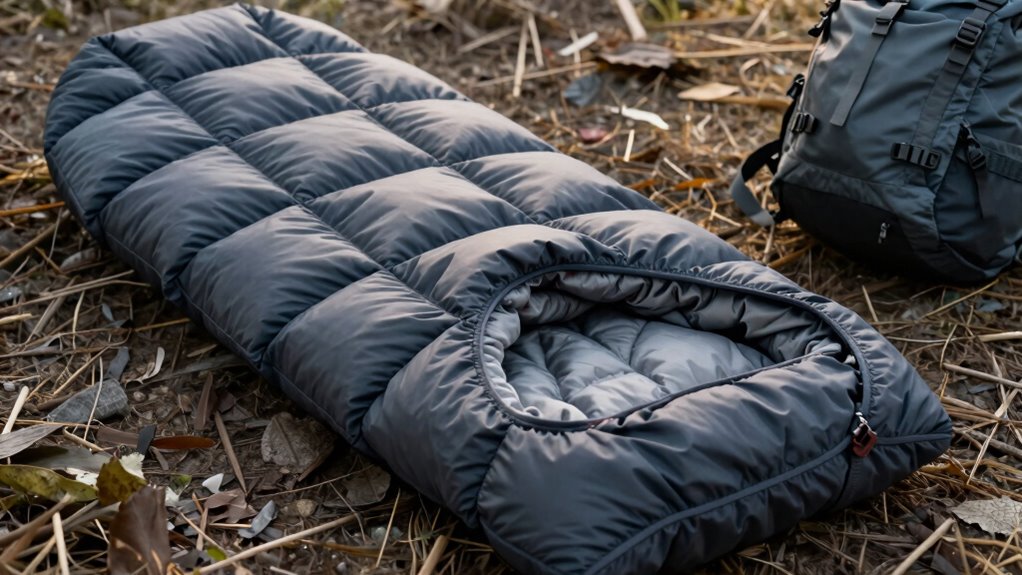

A down sleeping bag offers great warmth with less weight, making it perfect for backpacking and travel. It has a high warmth-to-weight ratio and compresses easily for packing. To keep it in top shape, air it out after use, store it loosely, and clean gently when needed. Proper care prevents damage and keeps it warm longer. Want to learn more about how to choose and maintain your down sleeping bag? Keep going!
Key Takeaways
- Down sleeping bags are lightweight, providing excellent warmth with less weight, ideal for backpackers and travelers.
- They require careful maintenance, like proper drying and storing, to preserve loft and insulation.
- Synthetic alternatives offer moisture resistance and are easier to care for in damp conditions.
- Down insulates better in dry environments but loses effectiveness when wet.
- Proper care, including airing out and gentle cleaning, extends the lifespan and maintains warmth of down sleeping bags.
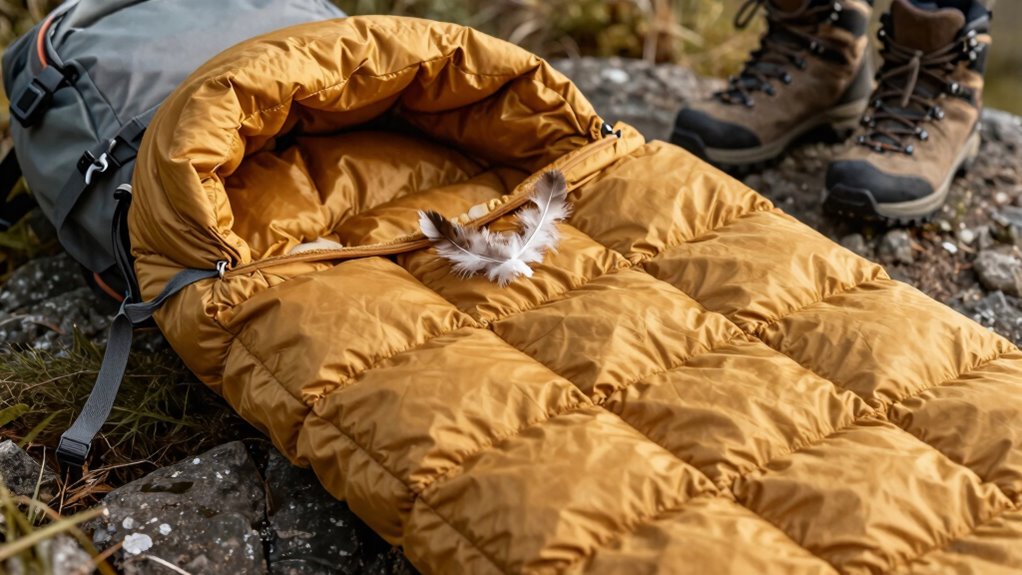
A down sleeping bag is a popular choice for campers and backpackers because of its lightweight design and excellent insulation. It keeps you warm without adding much weight to your pack, making it ideal for those who want to travel light. But you might wonder if down is the best option for your needs, especially if you’re concerned about durability or maintenance. Luckily, there are synthetic alternatives that can mimic down’s insulating properties, often at a lower cost and with benefits like better resistance to moisture. These synthetic options tend to dry faster and are less prone to losing their insulating ability if they get wet, which is a key consideration if you camp in damp conditions. When choosing between down and synthetic, think about your typical environment and how much maintenance you’re willing to do. Proper care and maintenance can significantly extend the lifespan of your sleeping bag and preserve its insulating capabilities.
Speaking of maintenance, caring for a down sleeping bag properly is essential to keep it performing well over time. Regular maintenance tips include airing it out after use to prevent odors and moisture buildup, and storing it loosely in a large storage sack rather than compressing it tightly. This helps maintain the loft of the insulative fill. If your bag gets dirty or stained, spot cleaning with a mild soap and cold water is best. When washing the entire bag, use a gentle, specialized down detergent or a mild alternative, and avoid harsh chemicals that can damage the feathers or synthetic fibers. Always follow the manufacturer’s instructions and make sure to thoroughly dry the bag, ideally using a low heat tumble dry or air drying in a well-ventilated space. Proper drying is essential because moisture trapped inside the bag can lead to mold and reduce insulation efficiency. Additionally, understanding the properties of down can help you make better decisions about when and how to care for your sleeping bag. Being aware of the moisture resistance of your chosen material can also guide your maintenance routine and environmental considerations.
In the end, whether you choose a down sleeping bag or a synthetic alternative, understanding how to care for it will extend its lifespan and ensure you stay warm on your adventures. Down offers superior warmth-to-weight ratio and compressibility, but it needs more attention to moisture and proper storage. Synthetic alternatives are easier to maintain and handle wet conditions better, making them a practical choice for unpredictable weather. Whichever you pick, adopting good maintenance habits will keep your sleeping bag in top shape, so you can focus on enjoying your trip rather than worrying about gear issues.

Naturehike Ultralight Backpacking RDS Down Sleeping Bag for Adults, 650 Fill Power Sleeping Bag for 42/52℉, 20oz Compact Lightweight Sleeping Bags for Hiking Camping 3 Seasons
- Size Options: Short and medium sizes available
- High Fill Power: 650 fill power duck down for warmth
- Ample Down Filling: 295g duck down for insulation
As an affiliate, we earn on qualifying purchases.
As an affiliate, we earn on qualifying purchases.
Frequently Asked Questions
How Long Does a Down Sleeping Bag Typically Last?
A down sleeping bag typically lasts between 5 to 10 years, depending on your care and usage. You can extend its lifespan by maintaining insulation durability and material longevity through proper cleaning, storage, and avoiding compression. Regularly inspect for clumping or damage, and repair any tears promptly. With good care, your down sleeping bag remains warm and reliable, providing comfort for many adventures over the years.
Can Down Sleeping Bags Be Used in Humid Environments?
An ounce of prevention is worth a pound of cure, so yes, you can use down sleeping bags in humid environments if you prioritize moisture management. Down’s breathability concerns mean it’s essential to keep the bag dry, as moisture can reduce warmth and cause mold. Use a waterproof bivvy or sleeping bag cover, and guarantee proper ventilation. With careful care, your down bag can perform well even in humid conditions.
Are Down Sleeping Bags Suitable for All Seasons?
Down sleeping bags aren’t ideal for all seasons because they excel in cold conditions but can struggle with moisture and humidity. For versatile use, you should consider synthetic insulation, which handles moisture better. Using sleeping bag liners adds extra warmth and protection, especially in milder or *intermediate* seasons. So, while down bags are great for winter, synthetic options and liners make other seasons more comfortable and practical.
How Do I Properly Store My Down Sleeping Bag?
To properly store your down sleeping bag, use storage techniques that keep it loose and airy, like hanging it in a closet or storing it in a large cotton bag. Avoid compressing it for long periods to prevent damage to the down. Make certain to prevent moisture by storing it in a dry, cool place, and ensure it’s completely dry before storing to avoid mold and odors.
What Is the Best Way to Clean a Down Sleeping Bag?
To clean your down sleeping bag, start with gentle cleaning techniques like spot cleaning stains with a mild detergent and a soft cloth. For overall cleaning, use a front-loading washing machine on a delicate cycle with cold water and a down-specific detergent. Avoid fabric softeners. After washing, gently tumble dry on low heat with clean tennis balls or dryer balls to restore loft and remove moisture.
Conclusion
Choosing the right down sleeping bag means balancing warmth, weight, and care to suit your adventures. Remember, down offers superior insulation for its weight, making it ideal for cold-weather trips. Did you know that down provides up to 550 cubic inches of loft per ounce, trapping more heat? With proper care—like using a sleeping bag liner and storing it loosely—you’ll enjoy its benefits for years. Make an informed choice, and you’ll stay warm and comfortable on all your outdoor journeys.