
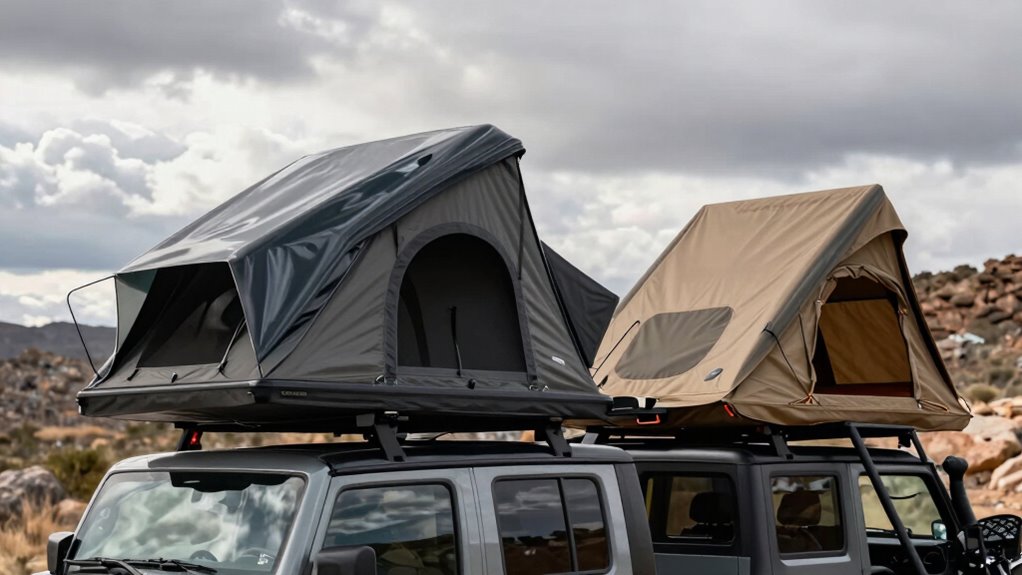

If you prioritize quick setup, durability, and better insulation, a hard shell rooftop tent is a great choice, offering reliable protection in various weather conditions. However, it may limit your flexibility and make packing more effort. On the other hand, soft shell tents are easier to install, more adaptable, and provide better ventilation for a traditional camping feel. For a deeper look into how these options compare, keep exploring the details.
Key Takeaways
- Hard shell tents offer better insulation and weather protection, ensuring consistent comfort in adverse conditions.
- Soft shell tents are easier and quicker to set up, ideal for spontaneous trips and frequent use.
- Hard shells provide a more secure and cozy sleeping environment, especially in harsh weather.
- Soft shells offer greater flexibility for interior customization and ventilation.
- Durability varies; hard shells are long-lasting but bulkier, while soft shells are lightweight but more susceptible to wear.
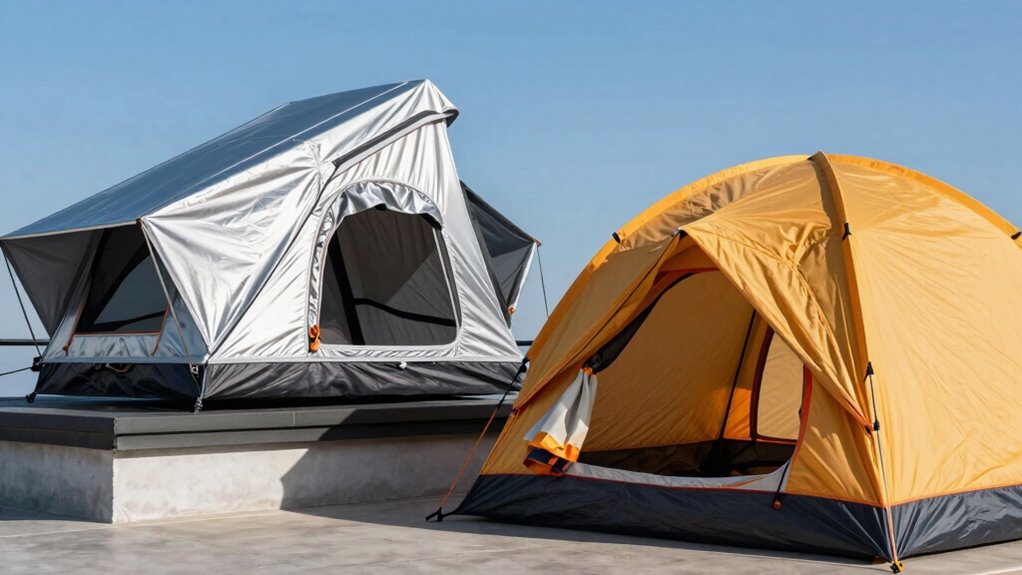
Are you torn between choosing a hard shell or soft shell rooftop tent for your next adventure? Deciding which type suits your camping needs comes down to understanding how each impacts your overall experience, especially when it comes to camping comfort and installation challenges. Hard shell tents are known for their quick setup, often taking just a few minutes to open and secure. This installation process can be particularly straightforward with hard shells, but it still requires some initial effort and planning. Their rigid exteriors provide better insulation against the elements, making them a comfortable choice if you’re camping in unpredictable weather. Plus, the sturdy shell offers enhanced protection from leaks and moisture, ensuring a dry, cozy sleep regardless of rain or dew.
However, while hard shell tents excel in convenience, they do pose some installation challenges. Their bulkiness can make them difficult to mount or remove from your vehicle, especially if you’re working alone or have limited space. You might need to invest time in proper mounting and ensure your roof rack can support the weight. Once installed, they’re generally stable, but initial setup can be intimidating for first-timers. Additionally, rigid exterior designs can limit flexibility in packing or storage options, which may influence your overall camping setup. The durability of the shell also means it tends to resist damage better over time, making it a long-lasting investment. In contrast, soft shell rooftop tents tend to be more lightweight and flexible, making them easier to install and remove. They fold out like a traditional camping tent, which means you can often set them up directly on most roof racks without additional equipment. This simplicity appeals to those who prefer minimalist setups or frequently change camping spots.
When it comes to camping comfort, soft shell tents offer a more traditional experience, with flexible fabric walls that can be adjusted for ventilation and easy access. They often include features like windows, screens, and customizable interiors, providing a more home-like feel. Still, soft shells usually require more time and effort to set up and pack down, which can detract from spontaneity, especially if you’re tired after a day of outdoor activities. Their fabric construction can also be less effective at insulating against cold or heat, so comfort might fluctuate depending on weather conditions. Understanding the weather resistance capabilities of each type can help you choose the right option for your specific camping environment.

WildFinder Rooftop Tent Hard Shell Roof Top Tent Hardshell Suitable for Jeep SUV Truck Van,Camping Car Roof for 2-3 Person
- Material: Aircraft-grade aluminum alloy construction
- Durability: Rust-proof stainless steel air pressure lever
- Fabric: Breathable, waterproof polyester fabric
As an affiliate, we earn on qualifying purchases.
As an affiliate, we earn on qualifying purchases.
Frequently Asked Questions
How Do Hard Shell and Soft Shell Tents Compare in Weight?
Hard shell tents generally weigh more than soft shell tents, which can impact your camping convenience and storage considerations. You might find that soft shells are easier to carry and set up due to their lighter weight, making them ideal for quick trips. In contrast, hard shells, while heavier, offer better durability and protection, but you’ll need to plan for their larger storage space and added weight when packing your vehicle.
Which Tent Type Offers Better Insulation for Extreme Weather?
If you’re facing extreme weather, a hard shell tent offers better insulation, maintaining interior warmth more effectively than soft shells. Notably, hard shells excel in ventilation efficiency, preventing condensation buildup, and provide superior noise insulation, reducing external sounds. This makes them ideal for harsh conditions, as they keep you warmer and quieter. Soft shells, while lighter, often struggle with insulation and noise, making them less suitable for extreme climates.
Are Hard Shell Tents Easier to Set up Than Soft Shell Tents?
Hard shell tents are generally easier to set up because they often feature quick, automated installation mechanisms, saving you time and effort. You’ll appreciate their packing convenience, as they fold into compact, durable cases, making transport and storage straightforward. Soft shell tents usually require more manual setup, like unfolding and securing, which can be more time-consuming. So, if ease of installation is your priority, hard shell tents are the way to go.
How Do Maintenance Requirements Differ Between the Two Types?
Ever wondered how maintenance differs? You’ll find that hard shell tents generally require less frequent cleaning routines because their durable shells resist dirt and debris better. Soft shell tents, however, need more regular cleaning to prevent mold and mildew. Storage considerations also matter—hard shells protect better during off-season storage, while soft shells are more sensitive to weather and need to be kept dry and well-ventilated.
Which Tent Is More Durable Over Long-Term Use?
A hard shell tent is generally more durable over long-term use because its sturdy exterior offers better protection against weather and physical impacts. You’ll appreciate the increased interior space and higher privacy levels, especially for extended trips. Soft shell tents may wear out faster, but they’re lighter and easier to pack. For durability, go with a hard shell, especially if you prioritize long-term reliability and consistent comfort.
Conclusion
Imagine choosing between a sturdy hard shell and a cozy soft shell for your rooftop adventures. Just like selecting the right gear can make or break a trip, your choice shapes your experience. I once traveled with a hard shell during a rainstorm, feeling secure and dry, while a soft shell might have felt more like a tent in a storm—comfortable but less protective. Ultimately, your decision hinges on what you value most: convenience or comfort.