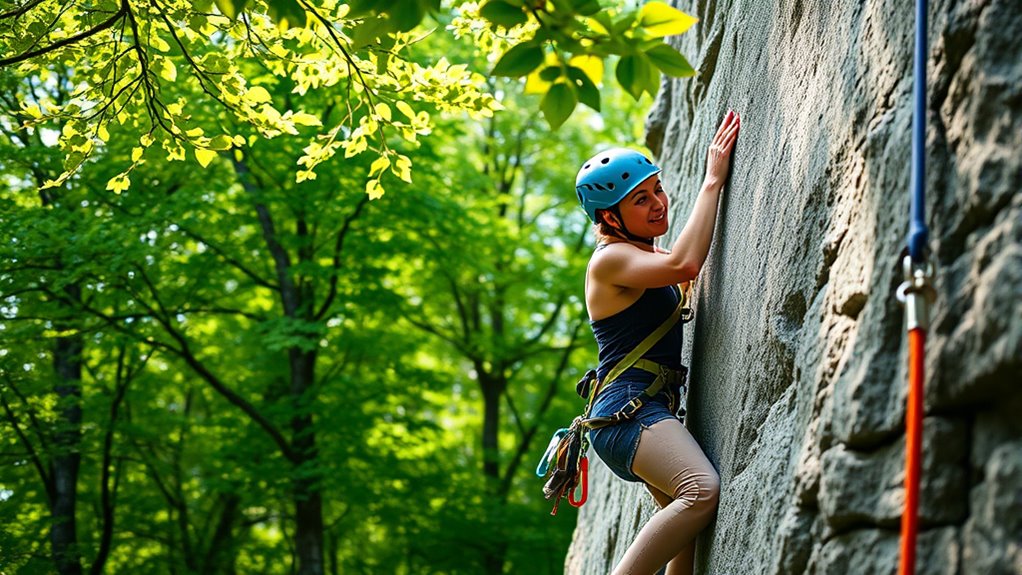

To climb safely as a beginner camper, always perform thorough safety checks on your harness, knots, and belay devices, and wear a helmet and proper climbing shoes. Start on easy routes that match your skill level, focus on body positioning and footwork, and communicate clearly with your belayer. Be aware of your environment, avoid bad weather, and respect climbing etiquette. Staying vigilant keeps you safe—continue exploring these fundamentals for a confident climbing experience.
Key Takeaways
- Always perform safety checks on harnesses, knots, belay devices, and gear before climbing.
- Use proper safety equipment, including a snug harness, helmet, climbing shoes, and chalk bag.
- Start with easy routes suited to your skill level and focus on fundamental techniques.
- Communicate clearly with your belayer using standard commands and maintain safe distances.
- Be aware of environmental hazards, check weather conditions, and respect climbing area rules.
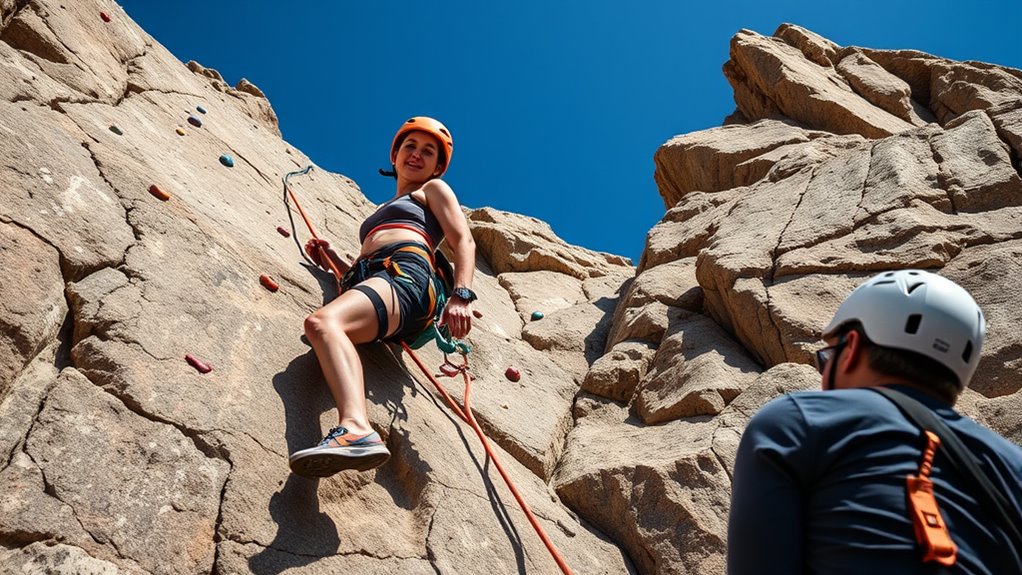
Are you interested in starting rock climbing but unsure where to begin? If so, prioritizing climbing safety is essential from the very first step. Before you hit the wall or crag, invest time in understanding proper safety protocols. Climbing safety involves not only knowing how to use your gear correctly but also recognizing potential hazards in the environment. Always perform a thorough safety check before climbing—inspect your harness, knots, belay device, and carabiners to verify everything is secure. Never overlook the importance of communication with your belayer; clear commands and constant attention prevent accidents. Understanding fall zones and maintaining a safe distance from loose rocks or unstable terrain also plays a vital role in staying safe during your climb.
Getting the right beginner gear is equally important. Starting with quality, beginner-friendly equipment simplifies learning and enhances safety. Your harness should fit snugly but comfortably around your waist and legs, providing support without restricting movement. Use a reliable climbing helmet to protect your head from falling debris or accidental bumps—never compromise on head protection. When selecting shoes, opt for snug-fitting climbing shoes that provide good grip and support, helping you feel confident on the wall. A chalk bag can improve your grip by keeping your hands dry, but always use it responsibly to minimize mess and environmental impact. Additionally, understanding climbing gear safety and maintenance is crucial to ensure your equipment remains reliable over time.
Choosing well-fitting gear like a harness, helmet, and shoes is key to safe, enjoyable climbing.
Once equipped, focus on mastering fundamental techniques before attempting difficult routes. Begin with easy, beginner routes that match your skill level, paying close attention to your footwork, body positioning, and movement efficiency. Proper technique reduces fatigue and minimizes the risk of falls. Remember, always stay within your comfort zone and progress gradually. If you’re at a climbing gym, take advantage of instruction sessions or beginner classes—these provide valuable guidance from experienced climbers and help you develop safe habits early on.
Finally, be conscious of your surroundings. Always climb within designated areas and respect local rules. If you’re outdoors, check weather conditions and avoid climbing in adverse conditions like rain or high winds. Maintain a safety-first mindset, and never push beyond your limits without proper training and supervision. By combining thorough safety practices with appropriate beginner gear, you set a solid foundation for enjoyable and secure climbing adventures. Building these habits early ensures you develop confidence and competence, making each climb safer and more rewarding.

Ttechouter Adjustable Thickness Climbing Harness Half Body Harnesses for Fire Rescuing Caving Rock Climbing Rappelling Tree Protect Waist Safety Belts
- Material: High-strength polyester with durable stitching
- Design: Four side equipment hooks for tools
- Safety Features: High-strength D-Rings for safety and comfort
As an affiliate, we earn on qualifying purchases.
As an affiliate, we earn on qualifying purchases.
Frequently Asked Questions
What Gear Is Essential for Beginner Rock Climbing?
You need a climbing harness, which fits snugly and comfortably, to guarantee safety. Learn knot tying techniques like the figure-eight knot to secure your harness and ropes properly. Always double-check your gear before climbing, and never skip safety protocols. A helmet, climbing shoes, and a chalk bag are also recommended. Prioritize safety by understanding your gear and mastering essential techniques to prevent accidents and build confidence on beginner routes.
How Do I Choose a Safe Climbing Route?
Think of choosing a climbing route like a seasoned explorer selecting a safe trail. Start with a thorough safety assessment, checking for loose rocks, unstable holds, and recent damage. Prioritize routes within your skill level, and always consult with experienced climbers or guides. Look for clear path markings and avoid routes with overhangs or complex features beyond your ability. Trust your judgment and prioritize safety above all.
What Are Common Climbing Injuries and Prevention Tips?
Climbing injury types include sprains, strains, cuts, and falls. To prevent these, always warm up properly, use correct techniques, and wear appropriate gear like helmets and harnesses. Regularly check your equipment for damage and avoid overexertion. Stay attentive to your surroundings, communicate clearly with your climbing partner, and listen to your body. Following these prevention strategies minimizes injury risks, ensuring a safer, more enjoyable climbing experience.
How Can I Improve My Climbing Technique Quickly?
To improve your climbing technique quickly, focus on maintaining proper climbing posture by keeping your hips close to the wall and your feet precisely placed. Use grip techniques that conserve energy, such as open-hand grips, and avoid over-gripping. Practice deliberate movements, stay balanced, and engage your core. Always prioritize safety by checking your gear and climbing within your skill level. Consistent practice with these strategies will lead to faster progress.
What Should I Do if I Encounter a Climbing Emergency?
In a climbing emergency, you should stay calm and follow emergency procedures. Check for injuries and provide first aid essentials like stopping bleeding or immobilizing fractures. If needed, call for help immediately and alert others nearby. Guarantee the climber is secure, then assess their condition carefully. Prioritize safety, avoid moving seriously injured persons unnecessarily, and wait for professional rescue teams to arrive. Staying composed and following these steps saves lives.
Conclusion
Now that you understand the essentials of rock climbing, remember that confidence and caution go hand in hand. While the thrill of ascent fuels your adventure, safety must always be your top priority—like a sturdy anchor in a storm. Respect your limits, double-check your gear, and stay attentive to your surroundings. Climbing offers exhilarating freedom, but without proper precautions, it can turn dangerous. So, climb smart, stay safe, and enjoy every rewarding moment on the rock.