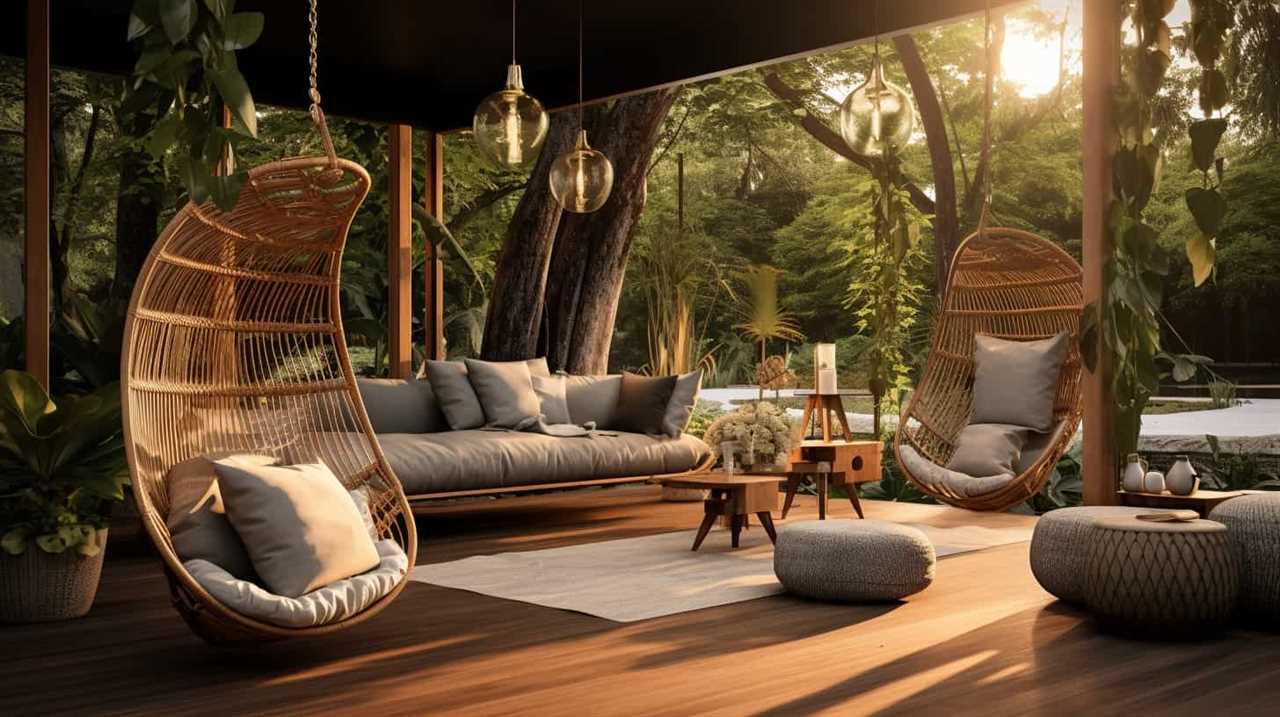
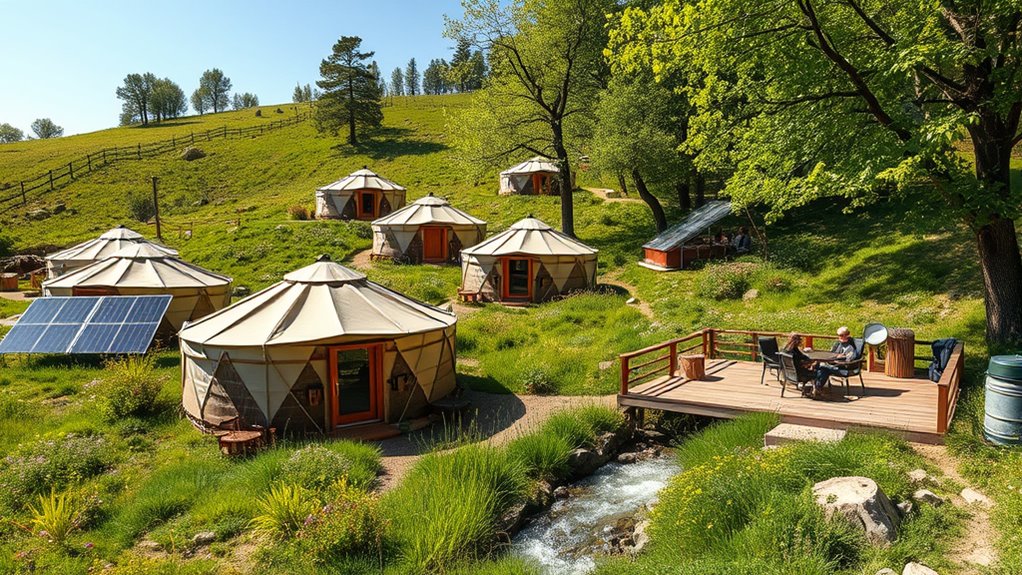

Eco-friendly glamping lets you enjoy nature without harming it. You’ll stay in accommodations powered by solar energy, using biodegradable toiletries and eco-friendly materials. These sites often feature sustainable construction from reclaimed or local materials, reducing carbon footprints. Water and waste management practices like conservation, recycling, and composting are standard, helping preserve ecosystems. By choosing this way to experience the outdoors, you support environmental stewardship. Keep exploring to discover how these practices create a truly responsible escape.
Key Takeaways
- Utilize solar energy to power lighting and appliances, reducing reliance on fossil fuels and lowering carbon emissions.
- Incorporate biodegradable amenities and eco-friendly materials like recycled fabrics and sustainable dishware to minimize waste.
- Use sustainable construction methods with reclaimed wood, natural insulation, and local sourcing to lessen environmental impact.
- Implement water-saving technologies and waste management practices such as composting and recycling to conserve resources.
- Promote responsible guest behavior and preserve natural landscapes, supporting eco-conscious tourism and environmental stewardship.
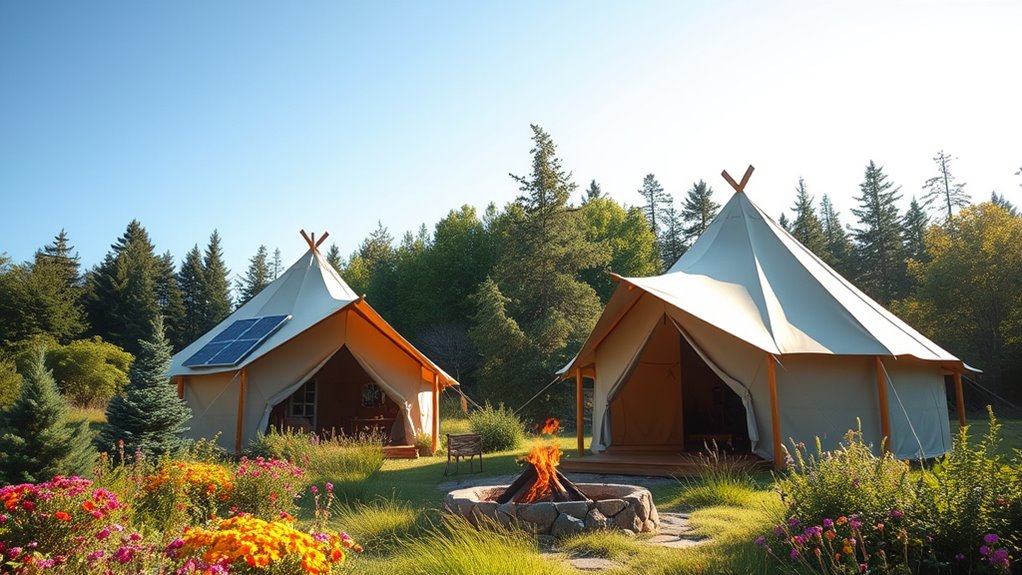
Eco-friendly glamping offers a sustainable way to enjoy nature’s beauty without compromising the environment. As a conscious traveler, you can immerse yourself in the outdoors while minimizing your ecological footprint by choosing accommodations that prioritize eco-conscious design and operation. One of the most significant features to look for is solar-powered amenities, which harness the sun’s energy to power everything from lighting to appliances. These amenities reduce reliance on fossil fuels, decrease greenhouse gas emissions, and promote renewable energy use. By staying in glamping sites equipped with solar panels, you actively contribute to the shift toward sustainable energy sources, guaranteeing that your stay leaves minimal impact on the environment.
Eco-friendly glamping with solar amenities reduces environmental impact and promotes sustainable energy use.
In addition to energy considerations, the materials used in eco-friendly glamping accommodations play an essential role in conservation efforts. Many of these sites incorporate biodegradable materials that decompose naturally, preventing waste accumulation and reducing pollution. You’ll find biodegradable amenities like compostable toiletries, eco-friendly dishware, and sustainable bedding made from organic or recycled fabrics. These materials are designed to break down without releasing harmful chemicals, protecting local ecosystems and water quality. Choosing accommodations that utilize biodegradable products demonstrates your commitment to reducing plastic waste and supporting responsible manufacturing practices.
The construction of eco-friendly glamping sites often emphasizes the use of sustainable, locally sourced materials that minimize environmental disturbance. This approach reduces the carbon footprint associated with transportation and extraction, while also supporting local economies. You might notice the use of reclaimed wood, natural insulation, and non-toxic paints—each selected to guarantee durability without compromising ecological integrity. As a guest, you can appreciate how these thoughtful choices foster a harmonious relationship with the surrounding environment, allowing you to enjoy the natural setting without leaving a lasting impact.
Moreover, eco-conscious glamping sites often integrate water-saving technologies, composting systems, and waste reduction initiatives alongside solar amenities and biodegradable materials. These practices work together to create a holistic sustainable experience. You can participate actively by conserving water, recycling, and avoiding single-use plastics during your stay. Your awareness and responsible behavior amplify the positive effects these accommodations aim to achieve. Additionally, many of these sites incorporate eco-friendly design principles, ensuring that their construction and operation align with ecological sustainability.
In essence, choosing eco-friendly glamping options with solar-powered amenities and biodegradable materials allows you to indulge in nature while championing conservation. Every thoughtful detail, from renewable energy to eco-friendly supplies, helps preserve the very landscapes you’re there to enjoy. Your awareness and choices make a real difference, supporting a future where sustainable travel and environmental stewardship go hand in hand.

Collapsible Portable LED Camping Lantern XTAUTO Lightweight Waterproof Solar USB Rechargeable LED Flashlight Survival Kits for Indoor Outdoor Home Emergency Light Power Outages Hiking Hurricane 4-Pack
【360° Lighting Coverage】Adopts 6+1 high-intensity LED chips, energy efficient/with wide range of visibility. Doubles as both a lantern…
As an affiliate, we earn on qualifying purchases.
As an affiliate, we earn on qualifying purchases.
Frequently Asked Questions
How Do Eco-Friendly Glamping Sites Manage Waste and Recycling?
You’re likely to find eco-friendly glamping sites managing waste through thorough waste management and recycling practices. They separate recyclables like plastics, paper, and metals, ensuring these materials are properly processed. Organic waste is composted on-site to reduce landfill contributions. This conservation-focused approach minimizes environmental impact, promotes sustainability, and encourages guests to participate in eco-conscious habits, fostering a deeper connection to nature and responsible tourism.
Are Solar Panels Common in Sustainable Glamping Accommodations?
Solar panels are quite common in sustainable glamping accommodations, enhancing eco-efficiency with clean, quiet solar power. Many sites prioritize practical, planet-positive practices by installing solar panels to boost energy efficiency and reduce reliance on fossil fuels. You’ll find that solar-powered glamping units conserve resources, cut carbon footprints, and create cozy, conscious getaways. This sustainable solution seamlessly combines comfort with conservation, ensuring your stay supports the planet’s preservation while providing picturesque, eco-friendly pleasures.
What Materials Are Used for Eco-Friendly Glamping Furniture?
You’ll find eco-friendly glamping furniture primarily crafted from reclaimed wood and bamboo, emphasizing sustainability and conservation. Reclaimed wood is repurposed from old structures, reducing waste and conserving resources, while bamboo grows rapidly, making it a renewable, durable choice. These materials not only minimize environmental impact but also add rustic charm. By choosing furniture made from reclaimed wood and bamboo, you support eco-conscious practices that protect natural habitats and promote responsible tourism.
How Do Glamping Sites Ensure Biodiversity Conservation?
You guarantee biodiversity conservation at glamping sites by actively preserving native plants and protecting wildlife habitats. You implement measures like native plant preservation to maintain local ecosystems, reduce invasive species, and promote biodiversity. Additionally, you design accommodations to minimize habitat disruption, install wildlife corridors, and avoid harmful chemicals. These actions help safeguard local flora and fauna, ensuring the natural environment remains vibrant and resilient for future generations.
Can Eco-Glamping Accommodations Accommodate Guests With Disabilities?
Sure, eco-glamping accommodations can host guests with disabilities—if you find sites with accessible facilities and inclusive design. Ironically, what’s often billed as “nature-friendly” now includes ramps, wide pathways, and sensory-friendly spaces, blending conservation with accessibility. These thoughtful features guarantee everyone can enjoy the wilderness without harm, promoting inclusivity while respecting the environment. So, yes, eco-glamping is evolving to welcome all, one sustainable step at a time.

Coghlan's Portable Toilet Tissue – Biodegradable Camping, Travel, 2-Pack
Easy to Pack and Carry – Two coreless rolls fit neatly in any bag, leaving more room for…
As an affiliate, we earn on qualifying purchases.
As an affiliate, we earn on qualifying purchases.
Conclusion
As you leave your eco-glamping retreat, realize you carry more than memories—you hold a seed of change. Every mindful choice, from solar-lit nights to biodegradable amenities, nurtures the Earth’s delicate balance. Your stay isn’t just an escape; it’s a symbol of harmony, a tiny leaf in the vast forest of sustainability. By embracing these practices, you become part of a cycle that sustains beauty, life, and hope for generations to come.
reclaimed wood glamping accommodations
As an affiliate, we earn on qualifying purchases.
As an affiliate, we earn on qualifying purchases.

BSEED Portable Shower for Camping with Immersion Water Heater, 6000mAh Rechargeable Camping Shower with Intelligent LED Display, Outdoor Shower for Hiking, Travel, Pets & Car Washing, Wartering Plants
Portable Shower with Long-lasting Battery – After hiking and camping, nothing is more pleasant and comfortable than taking…
As an affiliate, we earn on qualifying purchases.
As an affiliate, we earn on qualifying purchases.