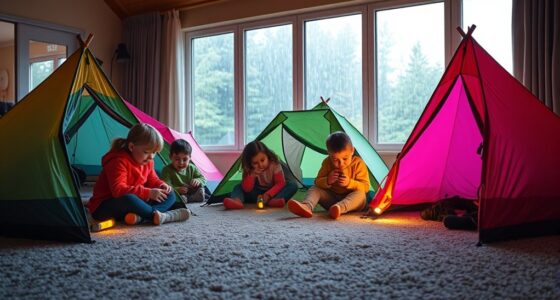


Introducing your kids to hiking is a wonderful way to foster a lasting love for nature and outdoor exploration. As you plan easy, engaging trails, involve them in preparation and highlight the importance of respecting wildlife and the environment. By creating fun, safe experiences, you’ll build trust and curiosity while teaching conservation and environmental values. Keep exploring these ideas, and you’ll discover how to turn outdoor adventures into meaningful lessons for a lifetime.
Key Takeaways
- Choose age-appropriate trails to ensure safety and enjoyment for children.
- Involve kids in preparing for hikes by packing and selecting snacks to foster engagement.
- Use positive, educational experiences to cultivate curiosity and appreciation for nature.
- Teach and model Leave No Trace principles to instill environmental responsibility.
- Encourage regular breaks and monitoring to build confidence and a lasting love for outdoor exploration.

Have you ever wondered how to spark a lifelong love of nature in your children? Introducing kids to hiking is a wonderful way to nurture their curiosity and appreciation for the outdoors. When you start early, you help them develop a connection to nature that can last a lifetime. One of the most important aspects of this journey is teaching them about nature preservation. Explain to your child why it’s crucial to protect the environment—how leaving no trace, respecting wildlife, and staying on designated trails help keep natural spaces beautiful and healthy for everyone. This not only instills a sense of responsibility but also fosters respect for the environment they’re exploring.
Introducing kids to hiking fosters lifelong love, curiosity, and respect for nature and preservation.
As you plan your hikes, prioritize safety to ensure that your children feel secure and confident. Hiking safety begins with choosing appropriate trails suited to their age and ability. Shorter, well-marked paths reduce the risk of getting lost and make the experience more enjoyable. Equip your kids with the right gear—comfortable shoes, hats, and plenty of water—and teach them how to use it. Keep a close eye on their energy levels and take regular breaks, so they don’t get overwhelmed or exhausted. Remember, a positive experience is key to cultivating their love for hiking and nature.
In addition to safety, involve your children in preparation. Let them help pack their backpacks and choose which snacks to bring. Teaching them about the importance of staying on the trail not only enhances their understanding of hiking safety but also reinforces the idea of respecting nature. Encourage questions and curiosity—point out plants, insects, and birds along the way, explaining their roles in the ecosystem. This active engagement turns a simple walk into a meaningful learning experience.
Creating a safe and educational environment during your hikes builds trust and enthusiasm. As they become more comfortable with outdoor adventures, your children will naturally develop a keen interest in nature preservation which is supported by the concept of environmental responsibility. Instilling these values early helps them see themselves as stewards of the environment, eager to protect the natural world for future generations. Through careful planning, safety awareness, and nurturing curiosity, you’re laying the foundation for a lifelong love of nature. With each hike, you’re not just exploring the outdoors—you’re planting the seeds of respect, responsibility, and wonder that will grow with your children for years to come.

Merrell Trail Chaser Hiking Shoe (Little Kid/Big Kid), Grey/Blue, 3 M US Little Kid
- Non-marking rubber outsole: M Select GRIP for traction
- Removable footbed: EVA for comfort and support
- Secure closure: Hook and look for precise fit
As an affiliate, we earn on qualifying purchases.
As an affiliate, we earn on qualifying purchases.
Frequently Asked Questions
How Can I Keep Kids Motivated During Long Hikes?
To keep kids motivated during long hikes, incorporate fun hiking games like scavenger hunts or storytelling challenges to keep their minds engaged. Use snack strategies by packing tasty, healthy treats at regular intervals to boost energy and enthusiasm. Encourage their curiosity about nature and praise their efforts. Your positive attitude and interactive approach turn each hike into an exciting adventure, helping kids develop a lasting love for the outdoors.
What Are Safe Hiking Trail Options for Young Children?
You should choose trail difficulty levels suited for young children, such as easy or beginner routes, ensuring they’re safe and manageable. Look for scenic routes that captivate their curiosity and keep them engaged without overwhelming them. Opt for well-maintained paths with gentle inclines and plenty of stopping points. These safe hiking trail options nurture their love for nature, making the experience enjoyable and memorable while providing a secure environment.
How Do I Handle Allergies or Insect Bites on Hikes?
When managing allergies or insect bites on hikes, stay prepared with allergy management tools like antihistamines or an epinephrine auto-injector if prescribed. Use insect bite prevention strategies such as applying insect repellent, dressing kids in long sleeves and pants, and avoiding peak insect activity times. Keep a calm, nurturing approach, reassure your child, and monitor for any signs of allergic reactions, seeking medical help if needed.
What Gear Is Essential for Hiking With Kids?
You’ll want to pack hiking footwear that’s comfortable and supportive for your kids, helping them stay steady on the trail. Don’t forget kid-friendly backpacks, which are perfect for carrying snacks, water, and extra layers. These essentials keep your little hikers prepared and comfortable. With the right gear, you’ll foster confidence and excitement in their outdoor adventures, making every hike a fun and memorable experience for your young explorers.
How Can I Teach Kids About Respecting Nature While Hiking?
You can teach kids to respect nature by modeling eco-friendly practices, like packing out trash and staying on trails. Encourage wildlife observation, emphasizing quietness and patience to avoid disturbing animals. Explain the importance of preserving the environment for future generations, making it a fun learning experience. By nurturing curiosity and responsibility, you’ll help kids develop a deep respect for nature that lasts a lifetime.
Conclusion
By taking small steps and sharing the joy of the outdoors, you’re planting the seeds for a lifelong love of nature. Remember, patience is key—building these memories takes time, but it’s worth every moment. When you introduce your kids to hiking, you’re opening their eyes to a world of wonder and adventure. Keep their curiosity alive, and soon they’ll be drawing strength from the great outdoors, proving that patience and persistence truly pay off.