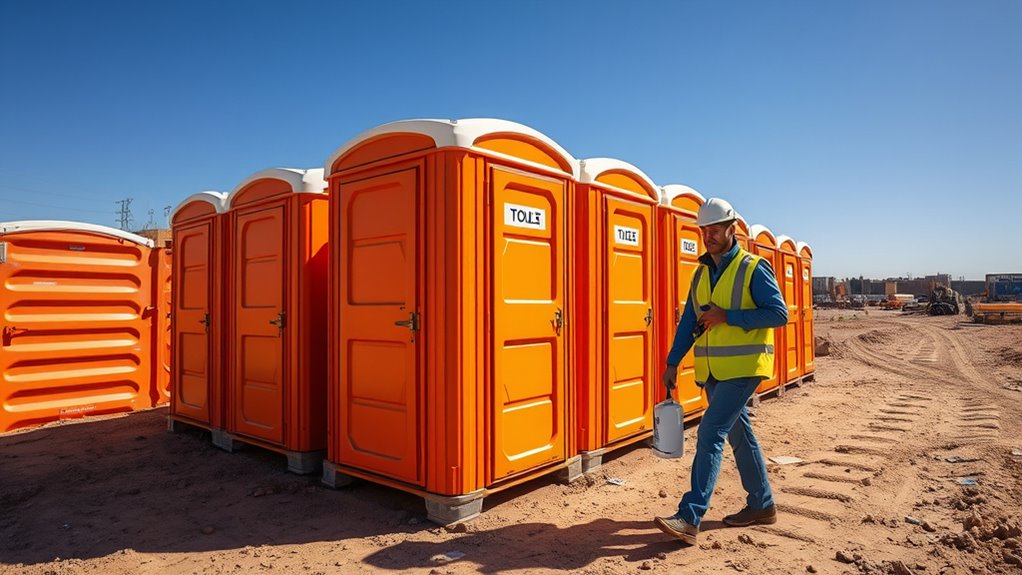

To find and use portable toilets effectively, assess your user volume and duration to select appropriate units with features like sealed tanks and venting systems for odor control. Place them on stable ground away from water sources, ensuring accessibility, privacy, and safety. Install handwashing stations nearby with soap and sanitizer to promote hygiene. Train staff on waste management procedures and maintain detailed maintenance logs. Continue exploring to learn how proper sanitation solutions can enhance health and safety in your environment.
Open a free Amazon Business account
Business pricing, bulk buying and tax-exempt orders.
As an affiliate, we earn on qualifying purchases.
Key Takeaways
- Assess user capacity and duration to select appropriately sized portable toilets with proper waste containment features.
- Place units on stable ground, away from food and water sources, ensuring privacy and accessibility for all users.
- Install handwashing stations nearby with soap and sanitizer to promote hygiene and prevent contamination.
- Schedule regular servicing for waste removal, tank cleaning, and odor control to maintain hygiene standards.
- Train staff in safe waste handling procedures and maintain detailed maintenance records to ensure consistent sanitation.
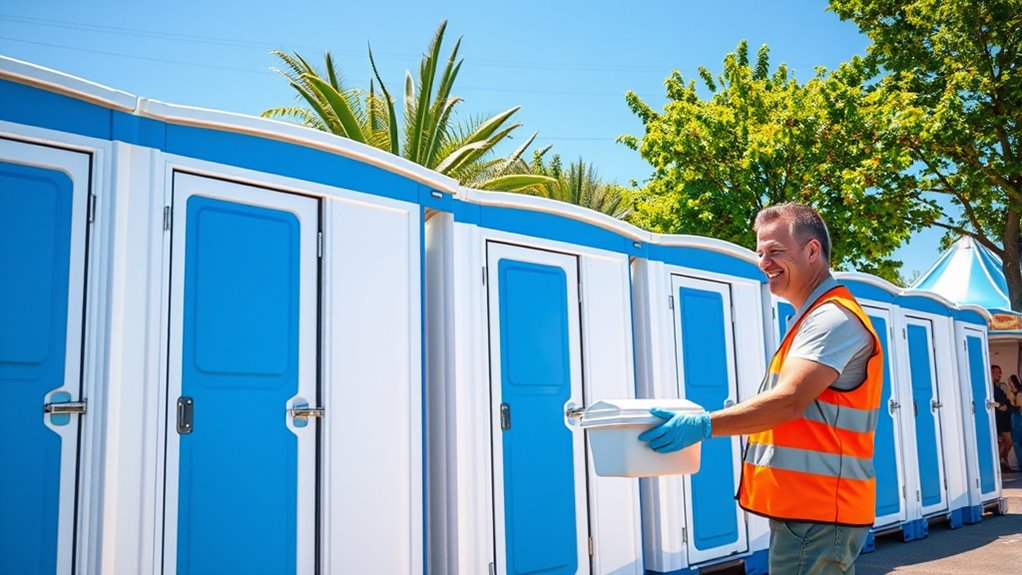
Portable toilets and sanitation solutions are essential components of effective hygiene management in temporary or remote settings. When selecting and utilizing these facilities, your primary focus should be on proper waste management and maintaining high hygiene standards. Waste management involves the systematic collection, containment, and disposal of human waste, preventing environmental contamination and health risks. Ensuring proper waste disposal is critical, particularly in areas lacking permanent sewer systems, as it directly impacts hygiene standards and public health.
You must evaluate the capacity and design of portable toilets to match the expected user volume and duration of use. Larger capacitated units with features like sealed tanks and venting systems facilitate efficient waste collection and minimize odor and bacterial proliferation. Regular servicing, including waste removal and tank cleaning, is vital to sustain hygiene standards. Neglecting routine maintenance can lead to overflow, foul odors, and increased health hazards, undermining the purpose of these facilities.
Placement is equally important; locate portable toilets on stable, accessible ground, away from food preparation or water sources to prevent cross-contamination. Proper positioning also involves ensuring privacy and compliance with accessibility regulations, which enhances user experience and safety. Adequate signage and clear pathways facilitate proper usage and reduce the likelihood of misuse or spillage, further supporting hygiene standards.
You should also consider the integration of handwashing stations equipped with soap, water, and hand sanitizers near portable toilets. These stations are crucial for breaking the chain of infection and promoting good hygiene practices among users. The design and maintenance of handwashing facilities should align with the same standards applied to the toilets, emphasizing cleanliness and ease of use.
Effective waste management protocols extend to staff training, ensuring personnel understand how to handle waste safely and efficiently. Proper training reduces risks of contamination during servicing and ensures compliance with health regulations. Additionally, record-keeping of maintenance activities helps monitor service schedules, identify potential issues early, and uphold hygiene standards consistently. Maintaining hygiene standards is especially important in environments where temporary facilities are used, as it helps prevent the spread of disease and ensures user safety.
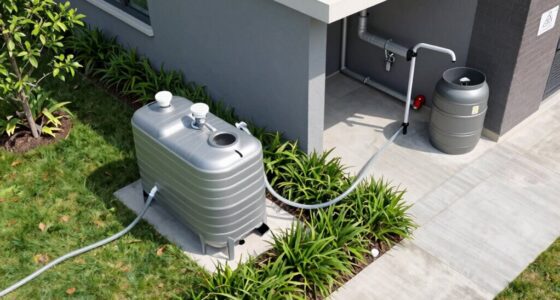
portable toilet with sealed tank
As an affiliate, we earn on qualifying purchases.
As an affiliate, we earn on qualifying purchases.
Frequently Asked Questions
How Do I Maintain Portable Toilets During Extended Use?
To maintain portable toilets during extended use, establish a regular cleaning schedule, ideally every 24 to 48 hours. Use proper cleaning agents and disinfectants to prevent odors and bacterial growth. Follow maintenance tips such as checking fluid levels, ensuring the vent and inlet valves function correctly, and inspecting for leaks or clogs. Promptly empty and sanitize the waste tank, and keep the unit well-ventilated to guarantee hygiene and operational efficiency.
Are There Eco-Friendly Sanitation Options Available?
Eco-friendly sanitation options like biodegradable products and solar-powered systems are increasingly available. Imagine a portable toilet that uses solar energy to power its flushing mechanism, reducing reliance on traditional power sources. These systems minimize environmental impact by using biodegradable cleaning agents and waste treatment methods. By choosing such options, you guarantee sustainable sanitation that conserves resources and reduces pollution, making your setup both efficient and eco-conscious.
What Are the Best Practices for Waste Disposal?
You should prioritize proper waste management by segregating waste, regularly servicing portable toilets, and guaranteeing sewage treatment protocols are followed. Use certified disposal methods, such as hauling waste to authorized treatment facilities, to prevent environmental contamination. Maintain documentation of waste disposal activities, and adhere to local regulations. Implement eco-friendly practices, like composting or using biodegradable products, to minimize ecological impact and ensure safe, compliant sanitation solutions.
How Do I Select the Right Portable Toilet for My Event?
Pick a portable toilet that precisely fits your event’s needs by prioritizing vendor certifications and clear pricing. Consider capacity, duration, and accessibility, then compare certified vendors to guarantee quality and compliance. Price considerations include rental costs, delivery, and maintenance fees. By focusing on certified providers offering transparent pricing, you ensure sanitary standards, reliable service, and a seamless experience, making your event comfortable, convenient, and compliant.
Can Portable Toilets Accommodate Special Needs or Accessibility Requirements?
Yes, portable toilets can accommodate special needs or accessibility requirements by incorporating accessibility features and inclusive design. These units typically include wider doorways, handrails, and sufficient space for mobility devices like wheelchairs. When selecting a portable toilet, guarantee it explicitly states compliance with ADA standards or other relevant regulations. Properly equipped units provide safe, comfortable, and accessible sanitation options, ensuring inclusivity for all users regardless of mobility or special needs.
Conclusion
In choosing portable toilets and sanitation solutions, you guarantee health, safety, and compliance, much like the unsung heroes behind the scenes of a well-orchestrated event. Proper selection and maintenance prevent outbreaks and environmental harm, echoing the silent strength of a foundation. By prioritizing these solutions, you uphold public health standards and sustainability—proving that even the smallest details, like a portable toilet, play a pivotal role in the bigger picture of sanitation management.
Flea & tick season Picks
flea and tick prevention
As an affiliate, we earn on qualifying purchases.