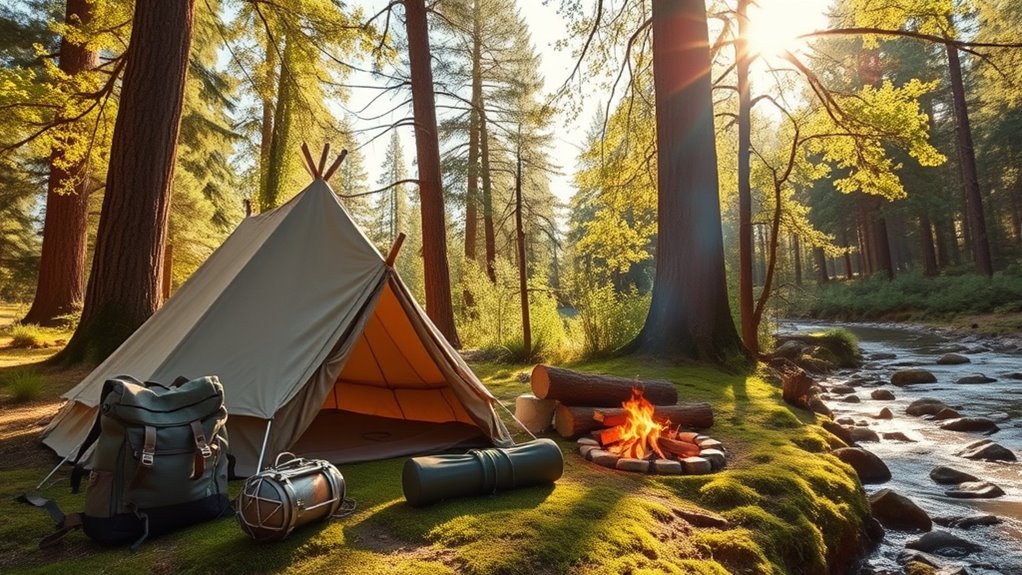

Preparing for long-term camping means packing durable, weather-resistant gear like tents, sleeping bags, and versatile tools to handle various conditions. Focus on sustainable practices by keeping your site clean, storing food securely, and minimizing environmental impact. Establish organized routines for water, food, and gear management to make daily life easier. As you plan ahead and stay adaptable, you’ll create a rewarding outdoor experience; discover more tips to make your adventure successful.
Key Takeaways
- Choose durable, weather-resistant tents and versatile gear suitable for extended use and changing conditions.
- Plan and store sufficient water and food supplies, using proper containers and purification methods.
- Establish daily routines for campsite organization, cleanliness, and waste management to minimize environmental impact.
- Incorporate sustainable practices such as biodegradable products and proper waste disposal to protect the environment.
- Ensure all equipment is regularly inspected and maintained to prevent issues during long-term camping.
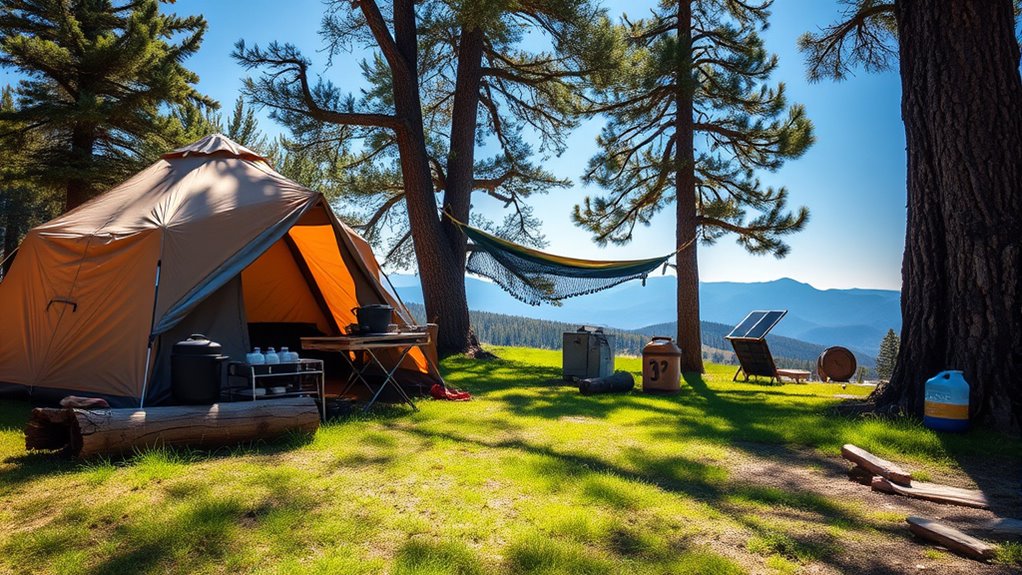
Extended-stay camping offers a unique way to immerse yourself in nature while enjoying the comforts of a longer visit. It’s an opportunity to truly settle into your surroundings, forging a deeper connection with the environment. But to make the most of your extended adventure, you need to think carefully about your camping gear and how you’ll manage your campsite. Proper preparation guarantees your experience is comfortable, safe, and enjoyable, even on longer trips.
When it comes to camping gear for extended stays, durability and versatility are key. You’ll want a sturdy tent that provides ample space and good weather resistance, along with a reliable sleeping system—think comfortable sleeping bags and pads that can handle different temperatures. Packing a variety of kitchen supplies, such as a portable stove, cookware, and utensils, allows you to cook nourishing meals instead of relying solely on non-perishable snacks. Don’t forget essentials like lighting, multi-tools, and extra batteries, which will keep you prepared for any situation. Remember, lightweight and compact gear will make transporting and setting up camp much easier, especially if you plan on moving locations during your stay.
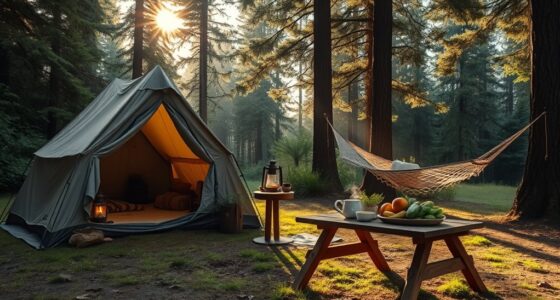
Managing your campsite over an extended period involves more than just setting up and breaking down. It’s about creating a sustainable environment that minimizes your impact on nature. Good campsite management means keeping your area clean—properly disposing of waste, recycling when possible, and avoiding unnecessary damage to vegetation. Establish designated areas for cooking, sleeping, and waste, to keep your campsite organized and safe. Regularly inspecting your gear to guarantee everything remains in good condition prevents small issues from turning into bigger problems. Also, consider how you’ll store perishable food and keep wildlife at bay; bringing coolers and using bear-proof containers can be lifesavers. Incorporating proper lighting solutions such as LED lanterns can also boost safety and convenience during nighttime hours.
Balancing comfort with conservation is essential. You might set up a small composting station or use biodegradable soaps to lessen your footprint. Planning for water management—whether it’s bringing enough or knowing how to find and purify water on-site—will keep you well-hydrated and healthy. As you settle into your extended stay, developing routines around campsite management will make each day easier. Keeping your gear organized, maintaining a clean site, and respecting nature’s boundaries will turn your long-term camping experience into a rewarding adventure. With the right gear and a thoughtful approach to campsite management, you’ll enjoy all the benefits of nature without sacrificing comfort.

FanttikOutdoor Zeta C6 Pro 6 Person Tent for Camping Setup in 60s (Khaki)
- Quick Setup: Set up in under 60 seconds
- Waterproof & Windproof: High-quality waterproof fabric with wind resistance
- Enhanced Drainage: Drainage channels and tub-style base prevent leaks
As an affiliate, we earn on qualifying purchases.
As an affiliate, we earn on qualifying purchases.
Frequently Asked Questions
How Do I Choose the Best Campsite for Extended Stays?
You should pick a campsite with great campground amenities that suit your needs, like reliable water, electricity, and waste disposal. Check the local regulations to guarantee long-term stays are permitted and that you’re compliant with rules. Look for a scenic location with privacy, shade, and easy access to outdoor activities. Prioritize safety, convenience, and comfort to make your extended stay enjoyable and stress-free.
What Are Essential Safety Tips for Long-Term Camping?
Safety isn’t just a shield; it’s your guiding light in the wilderness. When long-term camping, stay alert to wildlife encounters and keep a safe distance. Always have emergency preparedness gear, like a first aid kit and communication devices, within reach. Know your surroundings, and trust your instincts—nature’s beauty can hide dangers behind its serenity. Stay vigilant, respect wildlife, and prioritize safety to turn your adventure into a memorable journey.
How Can I Manage Waste and Sanitation Effectively?
To manage waste and sanitation effectively, prioritize water conservation and use biodegradable products. Always pack out your waste using designated containers or bags, and dispose of it properly at authorized sites. Keep a small shovel or scooper for waste disposal, and rinse your gear with minimal water. Regularly disinfect your hand tools and sanitization stations, ensuring a clean environment. This approach keeps your campsite safe, eco-friendly, and comfortable during your long-term adventure.
What Are Cost-Saving Strategies for Extended Camping Trips?
Did you know that proper meal planning can cut your food expenses by up to 30%? To save costs during extended camping trips, focus on durable camping gear and versatile supplies. Shop in bulk and choose multi-use items to minimize extra purchases. Preparing your meals ahead of time and packing efficient gear reduces waste and trips to stores, helping you enjoy longer adventures without overspending.
How Do I Maintain Mental Well-Being During Long-Term Camping?
To maintain your mental health during long-term camping, you should establish a routine that includes regular exercise and outdoor activities, which boost mood and reduce stress. Stay connected with loved ones through calls or messages to combat loneliness. Practice stress management techniques like meditation or deep breathing, and make time for hobbies or journaling. Creating a sense of normalcy and embracing nature’s tranquility will help you stay resilient and mentally well.
Conclusion
Extended-stay camping transforms your adventure into a home away from home, turning every sunrise into a new chapter of discovery. With the right planning and gear, you’ll weather the long haul like a seasoned sailor steering uncharted waters. Embrace the freedom and serenity that come with extended adventures, knowing you’ve prepared for anything that comes your way. So, pack your spirit of adventure and set sail on this unforgettable journey—your epic outdoor story awaits.