
The best hiking gear depends on what your trips demand: warmth, water capacity, emergency readiness, or a lighter load. My best overall pick is the Trekology Trek-Z Adjustable Folding Trekking Poles, a versatile support option for hikers who want help on varied terrain. For carrying water, the N NEVO RHINO 12L Hydration Backpack pairs a compact pack with a 2L bladder, while the BALEAF Fleece-Lined Thermal Hiking Leggings target cold-weather comfort. The main tradeoff is choosing useful, dependable gear without adding bulk or buying features your routes do not need. Read on for the full breakdown and a guide to matching each option to your hikes.

Get travel and outdoor gear delivered free with Prime
- Fast, free delivery on millions of items
- Prime Video, Amazon Music and more included
- Member-only deals all year
Complete the kit


Key Takeaways
- Trekking poles are the most versatile single upgrade: The Trekology Trek-Z set suits hikers seeking adjustable support across changing terrain, but poles are unnecessary weight on easy, flat walks.
- Hydration capacity changes how you plan a hike: The N NEVO RHINO’s 2L bladder and 12L pack are suited to carrying water and essentials together, while simpler outings may call for less capacity.
- Cold-weather comfort is split between layers and socks: BALEAF fleece-lined leggings address leg warmth, while the three merino sock picks offer different pack quantities and intended uses.
- Emergency tools are not substitutes for trip planning: The filter straws and XKASE survival kit add contingency options, but neither replaces carrying enough water, checking conditions, or knowing how to use equipment.
- Power and lighting solve different problems: The BLAVOR power bank supports device charging, while the rechargeable LHKNL headlamp helps with visibility; neither one covers the other’s job.
| Unenow Merino Wool Ski Socks for Skiing, Snowboarding, and Cold-Weather Activities |  | Best for Cold, High-Coverage Hikes | Fabric: Elastic, acrylic, and wool | Length: Knee-high | Fit: Regular | VIEW LATEST PRICE | See Our Full Breakdown |
| Merino Wool Crew Socks for Hiking and Winter, 3 Pairs |  | Best Value Sock Multipack | Fabric: 80% merino wool, 15% polyester, 4% nylon, 1% spandex | Style: Crew | Fit: Stretch | VIEW LATEST PRICE | See Our Full Breakdown |
| BALEAF Women’s Fleece-Lined Thermal Hiking Leggings | 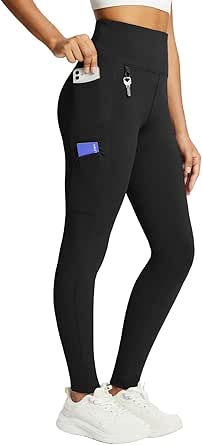 | Best Cold-Weather Leg Layer | Fabric: 75% polyester, 25% spandex | Waist: High-rise | Pockets: Four side pockets | VIEW LATEST PRICE | See Our Full Breakdown |
| BLAVOR 10,000mAh Solar Power Bank with Wireless Charging |  | Best Multi-Device Trail Power Bank | Battery capacity: 10,000mAh | USB-C output: Up to 20W | Wireless charging: Qi compatible | VIEW LATEST PRICE | See Our Full Breakdown |
| N NEVO RHINO 12L Hydration Backpack with 2L Water Bladder |  | Best Lightweight Hydration Pack | Capacity: 12 liters | Water bladder capacity: 2 liters | Weight: 8.5 ounces | VIEW LATEST PRICE | See Our Full Breakdown |
| LHKNL Rechargeable LED Headlamp, 2-Pack |  | Best Hands-Free Lighting | Pack size: 2 headlamps | Brightness: 1200 lumens | Battery: 1500 mAh rechargeable lithium-ion polymer | VIEW LATEST PRICE | See Our Full Breakdown |
| Practical Survival Reusable Emergency Water Filter Straws, 2-Pack |  | Best Lightweight Backup Water Filter | Pack size: 2 filters | Filtration method: Hollow-fiber membrane | Microplastic filtration: Down to 0.1 micron | VIEW LATEST PRICE | See Our Full Breakdown |
| MQELONG Women’s Merino Wool Crew Socks, 5 Pairs |  | Best Multi-Pair Cold-Weather Socks | Quantity: 5 pairs | Fabric: 70% merino wool, 22% polyester, 8% spandex | Style: Crew socks | VIEW LATEST PRICE | See Our Full Breakdown |
| XKASE 19-in-1 Survival Kit |  | Best Compact Emergency Kit | Number of items: 19 | Listed components: Compass, parachute cord, whistle | Case dimensions: 8.2 x 5.1 x 2.7 inches | VIEW LATEST PRICE | See Our Full Breakdown |
| Trekology Trek-Z Adjustable Folding Trekking Poles, Set of 2 |  | Best Packable Trekking Poles | Quantity: 2 poles | Shaft material: Aircraft-grade aluminum alloy | Available lengths: 100–120 cm or 115–135 cm | VIEW LATEST PRICE | See Our Full Breakdown |
More Details on Our Top Picks
Unenow Merino Wool Ski Socks for Skiing, Snowboarding, and Cold-Weather Activities
For cold-weather hikes where extra coverage matters, I’d pick the Unenow knee-high socks over the crew-length Merino Wool Crew Socks for Hiking and Winter. Their wool-and-acrylic blend is designed to retain warmth while absorbing moisture, and cushioned toes and heels add padding where footwear friction can become uncomfortable over long miles. The compression-style fit may also appeal to hikers who prefer a more supported feel beneath boots. That added coverage and thick cushioning come with a tradeoff: these socks may feel too warm or restrictive for mild-weather hikes or for anyone who dislikes compression. The product data also provides limited care guidance beyond machine washing, so buyers seeking detailed wash instructions may prefer the more specific guidance listed for the three-pair crew-sock option.
Pros:- Wool-and-acrylic blend is designed for warmth and moisture absorption.
- Cushioned toes and heels add padding in high-friction areas.
- Knee-high length provides more leg coverage than crew socks.
- Suitable for hiking as well as other cold-weather activities.
Cons:- Compression fit may feel restrictive to hikers who prefer relaxed socks.
- Thick cushioning and knee-high coverage may be too warm for mild conditions.
- Care details go no further than machine washing.
Best for: Hikers wearing boots in cold conditions who want knee-high coverage, cushioned heel and toe zones, and a compression-style fit.
Not ideal for: Warm-weather hikers and anyone who prefers lightweight, non-compression crew socks.
- Fabric:Elastic, acrylic, and wool
- Length:Knee-high
- Fit:Regular
- Cushioning:Thickened toe and heel
- Design:Compression support; anti-static
- Care:Machine wash
Our verdict“Choose these for cold hikes in boots when you want cushioned, knee-high coverage and are comfortable with a compression-style fit.”
Merino Wool Crew Socks for Hiking and Winter, 3 Pairs
The three-pair format makes these crew socks a practical choice for hikers who want a small rotation for cold-weather outings, rather than one specialized knee-high pair like the Unenow Merino Wool Ski Socks. Their blend is specified as 80% merino wool with polyester, nylon, and spandex, combining warmth with stretch; the cushioned footbed is aimed at comfort on rugged trails. They also have clearer care guidance than the Unenow pair, with machine washing specified in cold water. The main compromise is seasonal: this warm, cushioned construction may feel excessive on mild hikes, and the crew cut offers less lower-leg coverage than a knee-high sock. Buyers should also note that the stated origin can be USA-made or imported.
Pros:- Three pairs provide a rotation for multi-day use.
- Specified 80% merino wool blend is intended for warmth.
- Cushioned footbed adds comfort on rugged hikes.
- Machine-wash care specifies cold water.
Cons:- Warm construction may feel uncomfortable in milder conditions.
- Crew length provides less leg coverage than the Unenow knee-high socks.
- Country of origin may vary.
Best for: Cold-weather hikers who want three machine-washable pairs with a cushioned footbed and a stretchy crew fit.
Not ideal for: Hikers in warm climates or those who need knee-high coverage for tall boots and cold exposed legs.
- Fabric:80% merino wool, 15% polyester, 4% nylon, 1% spandex
- Style:Crew
- Fit:Stretch
- Quantity:3 pairs
- Care:Machine wash cold
- Origin:Made in the USA or imported
Our verdict“Pick this multipack for cold hikes when crew length and a cushioned footbed suit your boots better than knee-high coverage.”
BALEAF Women’s Fleece-Lined Thermal Hiking Leggings
For hikers who want warmth and useful storage in one garment, I’d choose these fleece-lined leggings over adding another layer of socks, such as the Merino Wool Crew Socks for Hiking and Winter. The high-rise waist and stretchy, non-see-through fabric provide coverage for trail movement, while four side pockets keep small essentials close without requiring a separate pouch. Water-resistant, wind-protective fabric can help with brief exposure to light weather, but it is not a substitute for rain pants or shell trousers during sustained precipitation. That limitation matters on exposed routes, and the leggings may need to sit under other pants for stronger weather protection. They suit cold hikes and mixed outdoor use, but buyers looking for a dedicated waterproof outer layer should choose different gear.
Pros:- Fleece lining adds warmth for cold-weather outings.
- Four side pockets carry small essentials.
- High-rise, stretchy design provides coverage during movement.
- Water-resistant and wind-protective fabric offers brief protection from light weather.
Cons:- Water resistance is intended only for brief exposure to light rain or snow.
- May need an outer layer for stronger weather protection.
- Imported origin may not suit buyers seeking domestic manufacture.
Best for: Women hiking in cold, dry or lightly wet conditions who want warm stretch leggings with pockets for a phone and small essentials.
Not ideal for: Hikers expecting sustained rain, deep snow, or a standalone waterproof pant for exposed trails.
- Fabric:75% polyester, 25% spandex
- Waist:High-rise
- Pockets:Four side pockets
- Weather protection:Fleece-lined, water-resistant, and wind-protective
- Fit and coverage:Stretchy, non-see-through fabric
- Closure:Pull-on
- Care:Machine wash
Our verdict“Choose these for cold hikes where warm, pocketed leggings are useful, but plan an outer layer for prolonged rain or snow.”
BLAVOR 10,000mAh Solar Power Bank with Wireless Charging
The BLAVOR is the most electronics-focused pick here: unlike the N NEVO RHINO 12L Hydration Backpack, which carries water and small essentials, this power bank is for keeping phones and other devices charged on the trail. Its 10,000mAh capacity, Qi wireless charging, and USB-C output rated up to 20W give hikers several charging options, while the ability to charge up to three devices at once suits groups or trips with multiple gadgets. An IPX5-rated body and built-in flashlights add practical trail features. Still, it weighs 9.3 ounces, and the listed fast-charging output applies to USB-C; solar charging performance is not specified. I’d treat solar as an extra feature, not a dependable way to refill the battery during a hike.
Pros:- 10,000mAh capacity supports charging phones and other small devices.
- Qi wireless charging and USB-C output provide multiple charging options.
- Can charge up to three devices simultaneously.
- IPX5-rated design includes dual flashlights and a compass carabiner.
Cons:- Weighs 9.3 ounces, adding noticeable weight to a light kit.
- Up to 20W output applies to USB-C, not all charging methods.
- Solar charging speed and performance are not specified.
Best for: Day hikers carrying a phone and other small electronics who want wired and wireless charging in a water-resistant power bank.
Not ideal for: Ultralight hikers who want to minimize carried weight or anyone relying on solar charging as a predictable main power source.
- Battery capacity:10,000mAh
- USB-C output:Up to 20W
- Wireless charging:Qi compatible
- Ports:3
- Water resistance:IPX5
- Weight:9.3 ounces
- Dimensions:5.91 × 3.07 × 0.87 inches
- Special features:Dual flashlights and compass carabiner
Our verdict“Choose this if charging several devices matters more than carrying the lightest possible kit, and do not depend on its solar feature alone.”
N NEVO RHINO 12L Hydration Backpack with 2L Water Bladder
For hikers who want water carried close at hand without taking a full-size pack, the N NEVO RHINO 12L combines a compact load space with an included 2-liter bladder. At 8.5 ounces, it is notably lighter than the BLAVOR 10,000mAh Solar Power Bank, making it a better fit when carrying water and a few small essentials matters more than charging devices. The air-mesh back and adjustable shoulder and chest straps support a customizable fit, while the coated nylon body is described as waterproof and tear-resistant. Its 12-liter capacity still limits bulky layers or larger trail kits, and the available pocket information is inconsistent: the specifications cite four pockets, while the feature text describes several compartments and mesh pouches. I’d choose it for streamlined day outings, not gear-heavy hikes.
Pros:- Lightweight 8.5-ounce design keeps carried weight down.
- Includes a 2-liter BPA-free, food-grade PEVA bladder with locking bite valve.
- Air-mesh back and adjustable shoulder and chest straps support fit and ventilation.
- Nylon body has a PU coating and is described as waterproof and tear-resistant.
Cons:- 12-liter capacity limits room for bulky gear and extra layers.
- Pocket count and layout are described inconsistently in the product information.
Best for: Day hikers, runners, and cyclists who want a lightweight pack with a 2-liter bladder and room for a few small essentials.
Not ideal for: Hikers carrying bulky layers, extensive safety gear, or supplies for a longer outing that need more than 12 liters of storage.
- Capacity:12 liters
- Water bladder capacity:2 liters
- Weight:8.5 ounces
- Dimensions:11.8 in W × 16.5 in H
- Material:Nylon with PU coating
- Bladder material:BPA-free, food-grade PEVA
- Straps:Adjustable shoulder straps (19–34 in); adjustable chest strap (2.4–7.9 in, up and down)
- Back panel:Air-mesh
Our verdict“Choose this for short hikes when a light, fitted hydration pack is enough, but look elsewhere for substantial gear capacity.”
LHKNL Rechargeable LED Headlamp, 2-Pack
The LHKNL pair stands out for hikers who want hands-free light without carrying a separate battery pack. Its motion sensor can switch the beam on or off with a hand wave, while the long-press shutoff avoids cycling through all eight modes when you are ready to pack up. The lamp pivots 60 degrees, helping direct light toward a trail, map, or campsite task without shifting the headband. Compared with the Trekology Trek-Z poles, this is a smaller, more personal piece of trail gear, but the poles offer more direct support on uneven ground. The two-pack is handy for a hiking partner or a backup, though the 4–10-hour runtime varies by use, and IPX4 protection covers splashes and rain rather than submersion. I would choose it for routine evening use, not as a sole light for extended trips without a charging plan.
Pros:- Two headlamps provide a spare or a light for a hiking partner.
- Motion-sensor control allows hands-free switching.
- 60-degree pivot and adjustable headband help aim and secure the beam.
- Rechargeable battery and eight white and red lighting modes offer flexible use.
Cons:- The stated 4–10-hour runtime varies with mode and use.
- IPX4 protection is not suitable for submersion.
- Rechargeable power requires a way to recharge on longer outings.
Best for: Hikers who want a lightweight rechargeable light for evening walks, campsite tasks, or a shared two-person kit.
Not ideal for: Remote-trip hikers who need a dependable light for long stretches without recharging, or anyone who needs waterproof gear for submersion.
- Pack size:2 headlamps
- Brightness:1200 lumens
- Battery:1500 mAh rechargeable lithium-ion polymer
- Runtime:4–10 hours
- Lighting:8 modes; white and red light
- Water resistance:IPX4
- Weight:1.87 oz
- Pivot angle:60°
Our verdict“Choose this two-pack for convenient hands-free trail and campsite lighting, but plan around its variable runtime and splash-only water protection.”
Practical Survival Reusable Emergency Water Filter Straws, 2-Pack
These straws suit hikers who want a compact backup for treating water at its source rather than carrying a larger filtration setup. The hollow-fiber membrane is described as reducing bacteria and parasites and filtering microplastics down to 0.1 micron. At two ounces per filter, the pair is easier to stash than the N NEVO RHINO 12L Hydration Backpack, which is built around carrying water and a bladder rather than filtering it. Each straw includes a backflushing plunger, but that maintenance adds a step, and the straw format is less convenient when you want to fill a bottle for later. I would also be cautious about the stated capacity: product information lists both 1,100 and 1,800 gallons. This makes the most sense as a small, direct-drinking option, not a complete water-carrying solution.
Pros:- Two compact filters weigh about 2 oz each.
- Hollow-fiber filtration is described as reducing bacteria, parasites, and microplastics.
- A backflushing plunger is included with each filter.
- BPA-free construction.
Cons:- Listed filter capacities conflict: 1,100 gallons in one place and up to 1,800 in another.
- Backflushing is needed to maintain the filter.
- The straw format is less suited to filling containers for later use.
Best for: Day hikers and emergency-kit builders who want a low-weight way to drink directly from a water source.
Not ideal for: Hikers who want to filter water into bottles for later, avoid routine filter maintenance, or need a clearly stated filter capacity.
- Pack size:2 filters
- Filtration method:Hollow-fiber membrane
- Microplastic filtration:Down to 0.1 micron
- Bacteria and parasite reduction:Over 99.99% as stated in product data
- Filter capacity:Product information lists both 1,100 and 1,800 gallons per filter
- Dimensions:8 x 1.5 x 1.5 inches
- Weight:2 oz per filter
- Included:Backflushing plunger per filter and user manual
Our verdict“Pick these straws for a lightweight direct-drinking backup, but not as a substitute for a bottle-filling filter or water-carrying system.”
MQELONG Women’s Merino Wool Crew Socks, 5 Pairs
The MQELONG set is a practical choice for hikers who want several warm crew socks for cold-weather outings and everyday wear. Its 70% merino wool blend is intended to provide warmth, while polyester and spandex add structure and stretch. Five pairs make it easier to rotate socks across a trip than a smaller multi-pair option such as Merino Wool Crew Socks for Hiking and Winter, 3 Pairs. The tradeoff is that the fit is offered as one size for most women’s shoe sizes 6–10, so hikers outside that range—or those who need a precise fit to reduce rubbing—should look elsewhere. Care instructions also suggest hand washing, which may be inconvenient on a longer trip. I see these as flexible cold-weather crew socks for mixed use, rather than a technical fit choice for hikers who need a specific size.
Pros:- Merino wool makes up 70% of the fabric blend.
- Five pairs allow rotation across multiple days.
- Spandex adds stretch to the one-size design.
- Crew height suits cold-weather use and everyday wear.
Cons:- One-size sizing may not fit every foot within or beyond the stated range.
- Hand washing is suggested, adding care work.
- The product data does not specify cushioning or a technical hiking fit.
Best for: Women with shoe sizes 6–10 who want several merino-blend crew socks for cold-weather hiking and daily wear.
Not ideal for: Hikers outside the stated shoe-size range or those who need a precise sock fit and easy-care washing for long trips.
- Quantity:5 pairs
- Fabric:70% merino wool, 22% polyester, 8% spandex
- Style:Crew socks
- Fit:One size for most women’s shoe sizes 6–10
- Care:Machine wash or hand wash; hand washing suggested
- Ironing:Do not iron
Our verdict“Choose this set for warm, versatile crew socks if the one-size range fits you; skip it if a precise trail-sock fit is a priority.”
XKASE 19-in-1 Survival Kit
The XKASE kit is aimed at hikers who prefer a ready-made bundle of emergency items over choosing each piece separately. The listed contents include a compass, parachute cord, and whistle, while its case is sized to fit in a backpack or car. That makes it a broader preparedness add-on than the LHKNL Rechargeable LED Headlamp, 2-Pack, which focuses on lighting rather than bundling several kinds of gear. The main limitation is transparency: the description says 19 items but does not name them all, so I would not rely on it as a complete, known set of essential equipment. There is also a major weight discrepancy—the description says 1.8 pounds while product data says 1.8 ounces. The compact case may help with storage, but the conflicting details make this a less certain choice than buying clearly specified essentials individually.
Pros:- Combines several types of outdoor and emergency items in one kit.
- Case dimensions suit storage in a backpack or car.
- Listed contents include a compass, parachute cord, and whistle.
- Foam interior is described as waterproof and shockproof.
Cons:- The product description does not identify all 19 items.
- Weight is inconsistent: 1.8 ounces in product data versus 1.8 pounds in the description.
- The listed contents alone do not establish that the kit replaces individually chosen essentials.
Best for: Casual hikers and drivers who want a compact assortment of emergency accessories to supplement their existing gear.
Not ideal for: Backcountry hikers who need verified, purpose-selected equipment or who need to know the exact contents and carried weight.
- Number of items:19
- Listed components:Compass, parachute cord, whistle
- Case dimensions:8.2 x 5.1 x 2.7 inches
- Item weight:Product data lists 1.8 oz; description lists 1.8 lb
- Case interior:Foam, described as waterproof and shockproof
- Model:XKASE-Y
Our verdict“Consider this as a compact supplemental kit for casual outings, not as a verified all-in-one solution for remote hikes.”
Trekology Trek-Z Adjustable Folding Trekking Poles, Set of 2
The Trekology Trek-Z set is the most trail-specific support option in this group: adjustable poles can help hikers steady their footing on uneven routes, while the tri-fold design packs down to 38 cm for storage between outings. Aircraft-grade aluminum and flip locks favor a sturdy, adjustable feel over the simplicity of the LHKNL headlamp, which addresses visibility rather than walking support. The EVA foam grips and included baskets and tips give the pair more flexibility across muddy or snowy ground, though they also mean more parts to keep track of. Each pole weighs 294 or 306 grams depending on length, so this is not the lightest possible setup for weight-focused hikers. Product information also says the poles are not permitted as airline carry-on, a notable drawback for travelers who want to keep gear with them in the cabin.
Pros:- Pair of adjustable poles offers a 20 cm adjustment range.
- Tri-fold construction collapses to 38 cm for packing.
- Aluminum shafts and metal-stopper flip locks support adjustable use.
- Includes rubber tips, mud stops, snow baskets, rubber feet, and a carry bag.
Cons:- Each pole weighs 294–306 g, depending on the length option.
- Product information says they are not permitted as airline carry-on.
- Multiple removable tips and baskets require extra storage and tracking.
Best for: Day hikers and trekkers who want adjustable, packable poles for varied terrain and do not need to carry them onto a plane.
Not ideal for: Ultralight hikers who want to minimize carried weight or air travelers who need trekking poles in cabin baggage.
- Quantity:2 poles
- Shaft material:Aircraft-grade aluminum alloy
- Available lengths:100–120 cm or 115–135 cm
- Adjustment range:20 cm
- Weight per pole:294 g for 100–120 cm; 306 g for 115–135 cm
- Folded length:38 cm
- Grip and lock:EVA foam grip; flip-lock with metal stopper
- Included components:Carry bag, rubber tips, mud stops, snow baskets, rubber feet
Our verdict“Choose these poles for adjustable support across changing terrain if packability matters more than minimum weight or air-cabin convenience.”
How We Picked
I compared these ten products by the hiking problem each one addresses: foot warmth, cold-weather clothing, hydration, lighting, device power, emergency preparation, and walking support. My ranking favors gear with a clear trail use, practical versatility, and a specific benefit that can justify carrying or maintaining it. I also weighed usability details such as pack capacity, adjustable fit, rechargeable operation, and whether a product is sold as a multi-piece set.
The order reflects usefulness across common hiking needs rather than treating every item as interchangeable. Trekking poles lead for their broad role on varied routes; the hydration pack follows for hikers who want water and essentials in one carry system. Clothing and socks are more condition-dependent, while the power bank, headlamp, filter straws, and survival kit serve narrower support or contingency roles. No product can replace route planning, suitable footwear, weather-appropriate clothing, or a personal emergency plan.
Factors to Consider When Choosing Best Hiking Gear
Build a hiking kit around your route, weather, and time outside instead of treating every accessory as essential. These picks cover distinct needs, so the right choice depends on what you already own and what your usual hikes lack.
Match the kit to your route and conditions
Start with distance, elevation, weather exposure, and access to water rather than shopping from a generic checklist. A short, familiar trail may call for little beyond suitable clothing and a way to carry water, while remote or cold routes can require more layers and backup equipment. A common mistake is buying survival accessories before covering basic needs such as food, navigation, and weather protection. For winter hiking, warmth and moisture management can matter more than adding another gadget. Choose gear for the conditions you expect, then adjust your kit when the forecast or route changes.
Choose capacity without overpacking
Pack capacity should reflect what you must carry, not just how much space a product offers. A hydration pack can simplify access to water, but a larger carry system may encourage extra weight or leave little room for items you need separately. Think through your water source, trip length, and whether you need space for layers, food, or safety equipment. For hikes with reliable refill points, carrying a full day’s water from the start may be unnecessary. Check how the pack fits when loaded and whether its storage layout suits the items you reach for most often.
Prioritize fit and comfort for clothing
Thermal leggings and hiking socks only help if they fit comfortably with your other layers and footwear. Socks that bunch or feel too thick can change how boots fit, creating friction where warmth was the goal. Fleece-lined leggings may suit cold outings but can feel too warm during strenuous climbs or mild weather. When choosing merino socks, compare the intended activity, crew height, and number of pairs rather than assuming all wool options feel or perform alike. If possible, check garment sizing and layering compatibility before committing to a cold-weather setup.
Treat safety accessories as backups, not plans
A water filter straw or survival kit can add contingency options, but carrying one does not make an unplanned route safe. Learn the equipment’s intended use and limitations, and check product instructions before relying on it outdoors. Water treatment also depends on the source and the risks present; a filter may not address every contaminant. A survival kit is most useful when its contents match the likely problems on your route and you know how to use them. Keep core preparation—route sharing, weather checks, water planning, and navigation—at the center of your safety routine.
Separate lighting from device power
A headlamp and a power bank address different failures: one helps you see and be seen, while the other can recharge compatible devices. Do not assume a charged phone can replace a dedicated light, especially if a hike could run past daylight. Likewise, a power bank’s listed capacity does not guarantee a fixed number of charges; output, cable or wireless use, and the device being charged all affect results. Check charging compatibility and how you will keep electronics protected from weather. For longer trips, plan how to conserve battery and carry a backup light source if conditions warrant it.
Pay for useful versatility, not extra features
Paying more or choosing a feature-rich item makes sense when it solves a repeated problem on your routes. Adjustable trekking poles may be useful across varied terrain, while a simpler setup can suit occasional flat walks. Multi-packs can help when you need spares or outfit several people, but they are poor value if most pieces remain unused. Solar charging and wireless charging can sound convenient, yet practical usefulness depends on compatible devices and realistic charging conditions. Before choosing, ask whether the added feature reduces a real burden or merely adds complexity to your kit.
Frequently Asked Questions
Which item should I buy first if I am building a hiking kit from scratch?
Start with the gap that could most affect your next hike, rather than buying the most specialized item first. If you lack a reliable way to carry water, the N NEVO RHINO pack addresses that need; if your routes have uneven terrain, trekking poles may be a more useful first upgrade. For cold-weather outings, prioritize appropriate clothing and socks that work with your footwear. A headlamp and basic navigation are also worth planning for when a hike could take longer than expected. The best first purchase depends on your route and what you already own.
Are water filter straws enough for drinking water on a hike?
A filter straw should be treated as a backup option, not as a complete water plan. Check the manufacturer’s instructions for what it can and cannot filter, since treatment products differ and a filter may not address every water hazard. Carry enough water for the route and know where reliable sources are before setting out. Do not assume that any stream or lake is safe because a filter is available. For remote hikes, use a treatment approach suited to the local risks and keep a backup method if the consequences of failure would be serious.
Should I choose merino socks or fleece-lined leggings for cold hikes?
They serve different purposes, so the choice depends on where you feel cold and what your other layers cover. Merino crew socks focus on foot comfort and warmth inside footwear, while fleece-lined leggings add insulation to your legs. Either can be uncomfortable if it changes the fit of boots or causes overheating during a hard climb. For a cold hike, test how each layer works with your full clothing and footwear setup before a long outing. If your feet are already warm but your legs are not, leggings may address the more relevant gap.
Do I need both a headlamp and a power bank?
They are complementary rather than interchangeable. A rechargeable headlamp provides hands-free light, while a power bank can supply energy to compatible electronics; a phone flashlight may drain the phone you need for communication or navigation. For short day hikes in settled weather, you may not need a power bank, but a headlamp is a useful contingency if plans run late. On longer trips, check charging compatibility and plan battery use across all devices. Keep enough power for the functions that matter most instead of assuming one accessory covers every need.
Are trekking poles worthwhile on easy day hikes?
They can help some hikers with balance or provide support on descents, but they are not necessary for every easy route. On smooth, flat trails, carrying poles may add bulk without much benefit. Their value rises on uneven ground, steep sections, or routes where a hiker wants extra points of contact. Adjustable folding poles can be packed away when not needed, though setup and fit still take attention. If you are unsure, consider the terrain and your comfort with poles before making them a standard part of your kit.
Conclusion
For a broadly useful support upgrade, I recommend the Trekology Trek-Z poles as best overall; hikers focused on water storage should choose the N NEVO RHINO hydration pack instead. For best value by quantity, the MQELONG five-pair merino sock set is the standout when you need several pairs, while the BLAVOR power bank is the best premium-style pick for hikers who specifically want added charging options. The N NEVO RHINO pack is also a straightforward choice for beginners who want water and essentials carried together. For specific needs, choose BALEAF leggings for cold-weather leg warmth, the LHKNL headlamp for hands-free light, or filter straws and the XKASE kit as supporting emergency tools. Match the purchase to a real gap in your kit, and skip accessories that do not fit your routes.